UFC Rematch Betting Patterns UK: Outcome Statistics
 Available in US
UFC Rematch Outcome Percentages and Title Fight Data
The first time I really paid attention to rematch data was in a fight I’d assumed was a 50/50 — a competitive championship rematch where both men had won previously and the public sentiment was that the second fight could go either way. The market had the previous winner at 4/6 and I couldn’t see why. After the fight, after the previous winner won again, I went and looked at the population numbers. UFC ufc rematch betting markets are anchored by a simple fact: the winner of the first fight wins the rematch about 66% of the time across a meaningful historical sample.
That 66% rate isn’t a coincidence and it isn’t just regression to the same skill gap. It reflects a real pattern in how rematches play out — the styles that produced the first win usually still work in the second meeting, and the loser rarely has enough time to retool the specific weaknesses that lost him the first fight. Recognising this pattern, and recognising when a specific rematch deviates from it, is the entire skill set in this market.
This piece covers what the rematch base rate actually says, how it shifts for title fights and trilogy bouts, the long-layoff exception, and how operators price the second fight relative to the first. The framework here applies to two-fight series and to trilogies, and it works equally for casual rematches and championship grudge matches.
The base rate across the population
Across a sample of approximately 78 UFC rematches between fighters who’d previously met, the original winner has won the rematch about 66% of the time — 52 wins to 26 losses. The number has been stable across multiple sub-samples and across different era cuts of the data. It’s a real statistical signal, not a small-sample artefact.
What drives the 66% rate is structural. The fighter who won the first fight did so because some combination of his style, his physical advantages, and his preparation worked against the opponent’s specific tools. In the second meeting, those underlying factors are almost always still in play. The loser of the first fight has typically had three to nine months to adjust, but the things that need adjusting — reach disadvantages, takedown defence gaps, cardio capacity, chin durability — aren’t the kinds of things that change quickly. They’re often the kinds of things that can’t be changed at all without years of focused work.
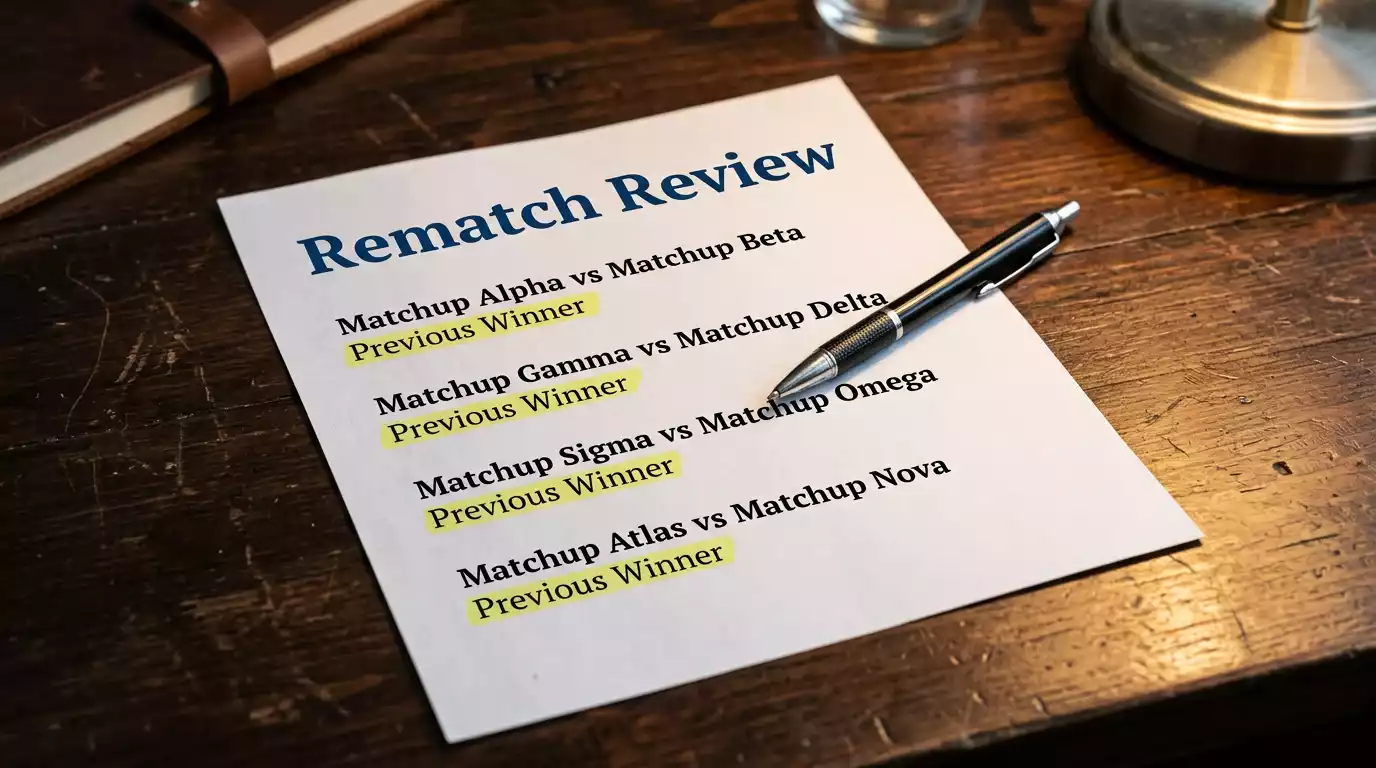
For the punter, the 66% rate translates to an expected fractional price on the previous winner of around 4/7 to 8/13 in a fair market. When operators price the rematch tighter than that — at 1/2 or shorter on the previous winner — they’re signalling either that the matchup has shifted or that the public money is pushing the line. When they price it longer — at evens or against — they’re flagging genuine doubt about whether the first result was representative.
The corollary is that the rematch loser’s underdog price is systematically tight. A 30 to 34% real win probability translates to a fair price of around 2/1 to 11/5, and operators rarely offer that much. You’ll often see the previous loser priced at 6/4 or 13/8 — implying probability of 38 to 40%, above the actual base rate. That gap is the operator’s margin doing its work, and it makes “back the previous loser to flip the result” a structurally losing strategy across volume.
Title rematches and the underdog champion pattern
Title rematches deserve a separate sub-analysis because the data behaves differently. Across a meaningful sample of UFC title fights, when a champion entered the bout as the underdog, they retained the title in 12 out of 19 cases — a 63% retention rate that’s close to but slightly below the general rematch rate.
The interpretation matters. A defending champion is typically there because they beat the contender once or established themselves through a different path; the contender is challenging because they’ve earned a shot through wins against other fighters. When the contender is favoured (the champion is the underdog), the market is saying “we think the contender’s recent form should outweigh the champion’s claim to the belt”. The 63% retention rate says that 37% of the time, the market is right about that — but the majority of the time, the champion’s positional advantage and tactical familiarity with the championship-rounds context proves decisive.

The 12-of-19 figure also tells you the bookmakers are pricing the wrong direction more often in title rematches than in general rematches. Their model has the contender favoured but is wrong 63% of the time on that read. That doesn’t mean “always back the underdog champion” — but it does mean underdog champion prices in title rematches are often value, particularly when the champion’s previous title defences show clear technical advantages that the contender hasn’t materially closed.
The other title-rematch wrinkle is the championship-rounds factor. Three-round non-title fights are essentially three samples of fifteen total minutes. Five-round title fights are five samples of twenty-five total minutes. The longer fight gives the technically superior fighter — typically the champion — more rounds to assert their advantage. That structural shift favours the better fighter even when the line says otherwise.
Trilogies and the small-sample problem
UFC trilogies are rare enough that the statistical generalisations break down. We have maybe 12 to 15 trilogies in the modern UFC era — far too few to derive base rates with the same confidence as two-fight rematches. What we can say is that trilogies tend to follow whatever pattern emerged from the first two fights, with the man who won the first two being a strong favourite to take the third (often properly priced as such), and the 1-1 split entering the third fight being closer to a pick’em.
The trap in trilogy betting is overreading narrative. The third meeting carries enormous storyline weight — “the rubber match”, “the closing chapter”, “settling the rivalry”. That narrative attention drags public money toward whichever fighter has the more compelling story, often the underdog (whose comeback completes the arc) or the previous loser (who’s “finally figured him out”). Operator pricing reflects that public money pressure, sometimes producing inflated lines on the narrative pick that don’t reflect underlying probability.
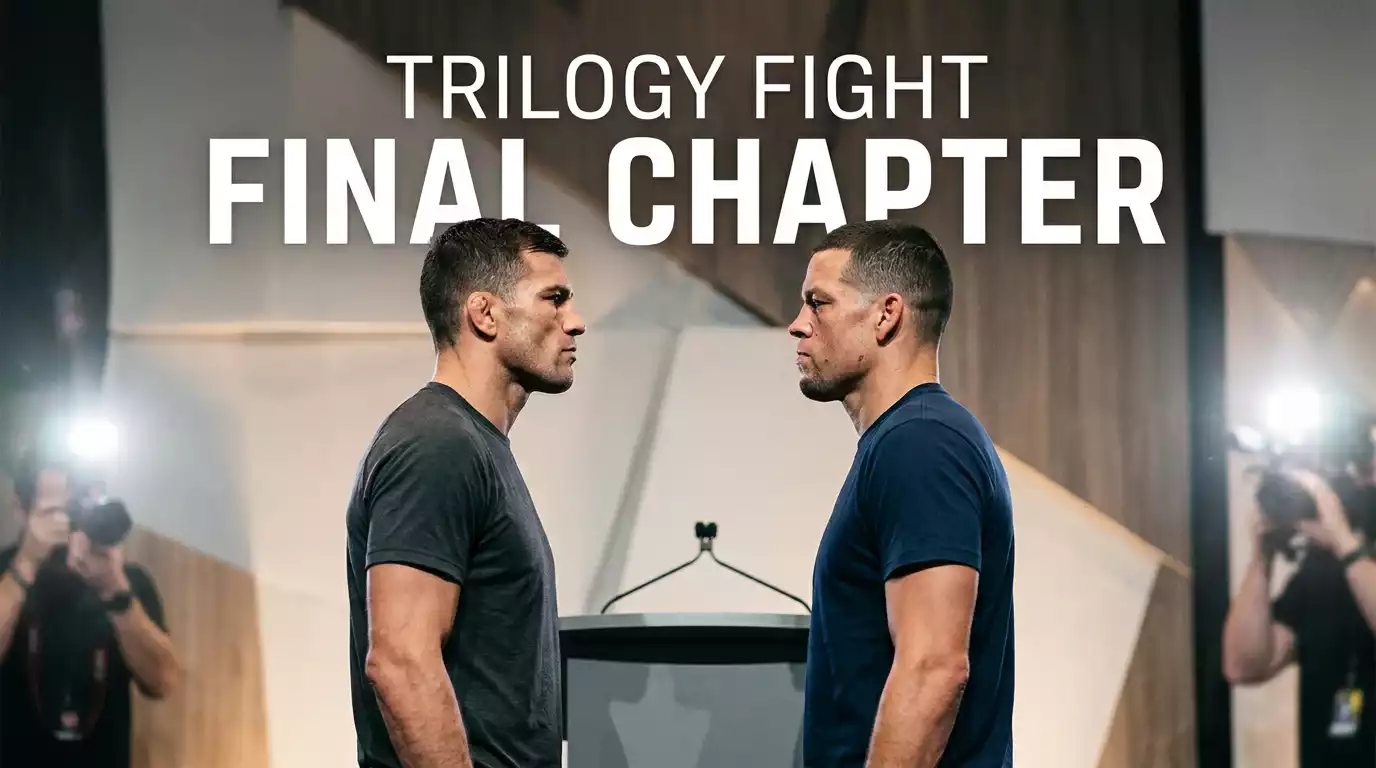
The defensible trilogy positions are conservative ones. If a fighter is 2-0 in the series and is being priced as a moderate favourite (4/7 or so), back him at small stakes — the base rate supports the position, and the price isn’t so short that you’re chasing a tight margin. If the series is 1-1, treat the trilogy as essentially a new fight informed by the two priors, and apply the same analytical framework you’d use on any pick’em-shaped line — see the related discussion on favourite versus underdog winrates and how to apply them to specific matchups for the underlying mechanics.
The gap effect: how time off reshapes edge
The 66% rematch rate is the population average, but it’s not uniform across all rematches. The strongest finding from sub-sample analysis is the gap effect: the longer the time between the first fight and the rematch, the less the original result predicts the second.
Quick rematches — within six months of the first fight — see the previous winner take the second fight about 72% of the time. Both fighters are still operating with essentially the same toolkit, the same coaching, the same body composition. The first result is highly predictive.

Medium-gap rematches — six months to two years — sit near the 66% population average. Some adjustment is possible in that window, but the fundamentals are still in place.
Long-gap rematches — two years or more — see the previous winner take the second fight only about 55% of the time, barely above coin-flip. Two years is enough time for cardio to deteriorate, for one fighter to add tools the other doesn’t anticipate, for body composition to shift, and for the loser to have undergone meaningful camp changes. The first fight stops being a strong predictor.
The market’s pricing of rematches has shifted to reflect this — partly. Recent-year UFC results have been a record commercially as well as competitively. Dana White summed up 2024 broadly: “[2024] was a record year for us again — not only as far as financially for the company but [also] breaking arena records.” That commercial growth has come with more headline rematches, more long-gap title-shot follow-ups, and more trilogies being booked years apart. The pricing on long-gap rematches has correspondingly loosened, with previous winners often priced at evens or against in matchups where the first fight is two or three years in the past.
For the punter the lesson is that the headline 66% rate has to be qualified by the gap. Quick rematches at 4/6 on the previous winner are decent value (true probability 72%, implied 60%). Long-gap rematches at the same 4/6 are overpriced from the punter’s perspective (true probability 55%, implied 60%). The mathematical edge flips entirely based on the time between fights, and operators are increasingly aware of this — but not always fully priced for it.
Why the rematch favourite price tightens
One pattern worth noticing is that the rematch price on the previous winner is almost always tighter than the moneyline on the same fighter in the first meeting. That seems counterintuitive — if anything, the previous winner should be priced based on demonstrated victory rather than on speculation about the first fight — but operators are pricing two things at once: the base rate plus the public bias that backs the proven winner.
If a fighter was 6/4 in the first meeting and won, his rematch price will often be 4/7 or shorter — implying probability above 60%, against the population’s 66% but accounting for the closer matchup that the first result might suggest. Sometimes the tighter price reflects genuine new information (the first fight was a dominant win, indicating a larger skill gap than the original line suggested). Sometimes it reflects public money pressing on the proven winner. Distinguishing these two scenarios is part of the read.

The disciplined approach: if the first fight was close, the rematch should price closer to the first fight’s line, not tighter. If the first fight was a dominant finish, the rematch can defensibly tighten — the gap is larger than the first line suggested. If the operator has tightened well beyond what the first-fight result justifies, you’re being asked to pay for public bias, and the value sits on the previous loser at the still-overpriced underdog line. None of these are mechanical rules. They’re frames for reading the second-fight market as a refinement of, rather than a repetition of, the first-fight pricing.
Does the 66% rematch base rate apply if the first fight was a split decision?
The rate softens noticeably for close decisions. When the first fight was a split decision or a razor-thin unanimous decision (close on multiple judges’ cards), the previous winner takes the rematch closer to 55–58% of the time rather than 66%. The interpretation is straightforward — a close first fight is less predictive than a dominant first fight, and the second meeting is essentially a new sample with the prior result as soft evidence rather than strong evidence. Operators sometimes don’t fully price this softening, particularly on rematches where the first decision was controversial.
How does a fighter’s age between rematches change UFC betting odds?
Age gap is one of the strongest secondary factors in rematch pricing. A previous winner who was 28 in the first fight and is 32 in the rematch has typically lost some of the physical attributes that won him the first fight — speed, recovery, durability — even if his technique has improved. Operators price this, but inconsistently. Veteran fighters in their mid-thirties or older defending recent wins against rising contenders are systematically slightly overpriced as favourites; the same fighter as the underdog in the rematch is often fair value or even undervalued.
Created by the ”bet on ufc Fight” editorial team.