Problem Gambling Support UFC UK: Bettor Safety Tools
 Available in US
Table of Contents
UFC Bettor Helplines and Deposit Limit Tools UK
This piece is a practical map of the support routes available to UK UFC bettors whose betting has stopped feeling like entertainment and started feeling like a problem. There is no moralising here, and no detailed description of how problem gambling progresses — that information is available through clinical sources and isn’t useful to read alongside a fight card. What’s useful is knowing exactly what tools exist, what each one does, and which one to reach for if you or someone close to you is recognising that the current pattern isn’t sustainable.
The UK problem gambling support uk infrastructure is among the most comprehensive in the world: a national self-exclusion register that covers every licensed operator, a national helpline staffed 24/7, multiple support charities offering confidential advice and treatment, and operator-level deposit and time limits that can be set in minutes. The infrastructure exists because the problem is real — about 2.7% of UK adults score 8 or higher on the PGSI, the recognised threshold for severe problem gambling, and the rate among younger adults runs several times higher. The tools are there. Knowing how to use them is the part this piece covers.
If you’ve come to this article because you’re worried about your own gambling, or about someone else’s, the helpline number you can call right now is 0808 8020 133 — the National Gambling Helpline, free, confidential, available 24 hours. The rest of the article walks through everything else.
The early signals that something has shifted
UFC betting can move from entertainment to problem behaviour gradually, which is why the early signals are often missed. The patterns worth recognising are behavioural rather than financial in the first instance — the financial consequences typically follow the behaviour rather than preceding it.
The first signal is the relationship to time. UFC cards are weekend events, but problem gambling on UFC often shows up as mid-week activity that doesn’t fit the schedule of the actual sport — betting on undercards you haven’t researched, on prelims you’re not watching, on in-play markets during fights you’re only half engaged with. When the betting expands beyond the natural UFC calendar, the betting itself has become the activity rather than the sport being the activity.

The second signal is the relationship to outcome. Recreational bettors care about specific bets — the win or loss matters because it relates to a fight they cared about and a read they articulated. Problem bettors care less about the specific outcome and more about the volume of action. Winning a bet creates pressure to redeploy the winnings rather than to enjoy the result.
The third signal is concealment. Recreational bettors mention their bets in conversation; problem bettors increasingly don’t. The shift toward concealing the activity from partners, family, or friends is one of the most consistent markers across people who later identify their gambling as having become a problem.
The fourth signal is chasing — the use of further betting to recover losses. The pattern looks like increased stakes after losing sessions, expanded bet types to manufacture larger potential returns, and a felt urgency to “get back to even” that overrides the analytical discipline that informed earlier betting decisions.
None of these signals on their own indicates a problem. All of them together, sustained across weeks or months, does. The PGSI screening that researchers use captures these patterns formally; recognising them informally is the first step toward acting on them.
What GamStop actually does
GamStop is the UK’s national self-exclusion register, run by the National Online Self-Exclusion Scheme. Registration with GamStop blocks the registered user from all UKGC-licensed online gambling sites and apps for the chosen period — six months, one year, or five years.
The mechanism is straightforward. You register at gamstop.co.uk with your name, date of birth, address, and email. Once verification completes (typically within 24 hours), every UKGC-licensed online operator is required by their licence conditions to block your account from accessing their service for the period you’ve selected. The block is real and immediate — accounts are closed, deposits are refused, and account creation attempts on new operators are rejected by the cross-operator GamStop check.
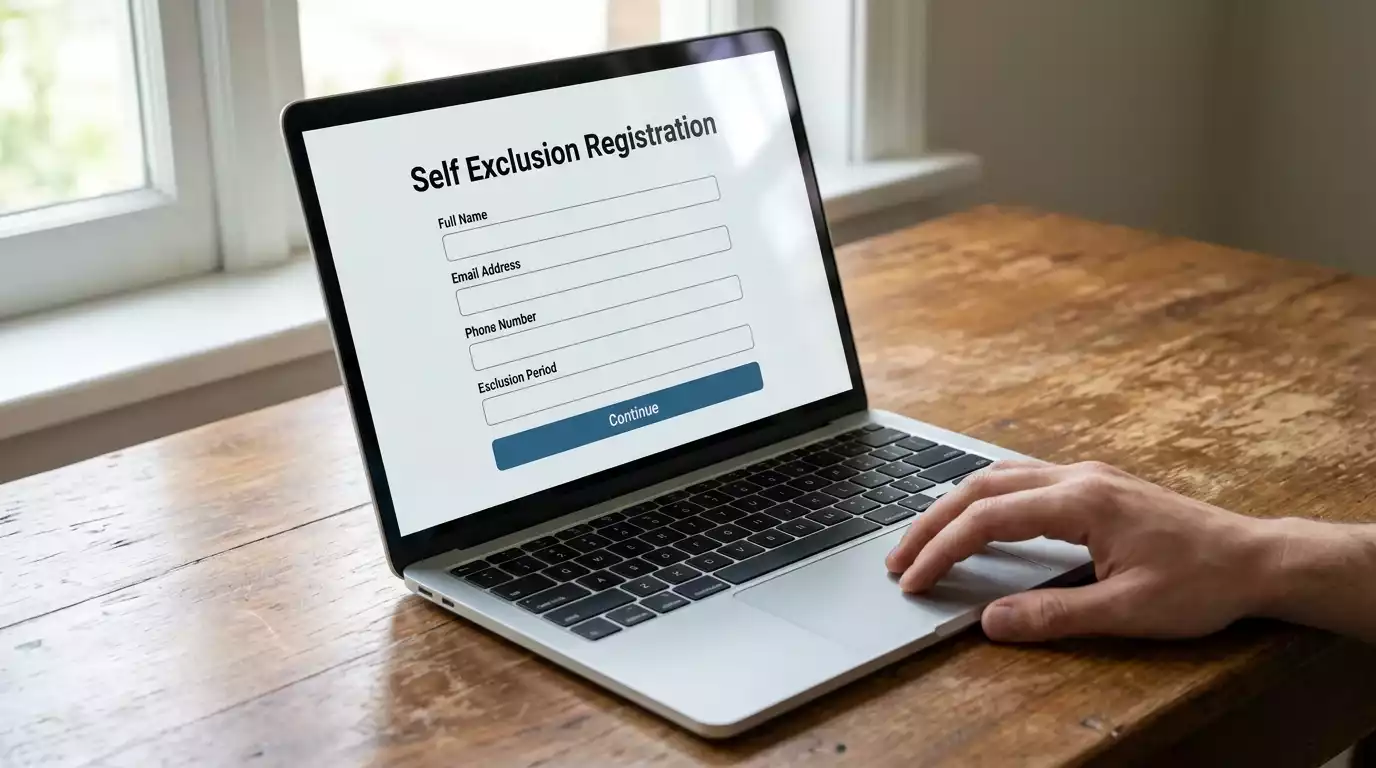
The crucial property of GamStop is that it can’t be reversed before the period ends. Once you’ve registered for six months, you have six months of blocked access. There’s no cooling-off period that lets you reverse the registration in a moment of weakness. That irreversibility is the protective feature — it removes the temptation to override the decision when emotional state shifts.
The coverage is comprehensive within UK licensing. Every UKGC-licensed online site participates, including all major sportsbooks that take UFC bets. The coverage doesn’t extend to offshore sites, which is one of the structural reasons the offshore market is dangerous for UK punters who’ve identified problem behaviour — GamStop is undermined by the existence of unregulated alternatives that don’t participate in the register.
For UFC bettors specifically, GamStop registration takes you out of every UK channel where UFC bets can be placed legally. You can still watch the sport, follow the cards, engage with the content. The betting access is what’s blocked. That separation is the point — many people whose problem behaviour has centred on UFC find that removing the betting access while keeping the sport itself returns the experience to entertainment.
Deposit limits and time limits inside your account
For UK punters whose situation hasn’t reached the GamStop threshold but who recognise some of the early signals, operator-level deposit and time limits are a more proportional tool. Every UKGC-licensed operator is required to offer these tools, and they’re available from inside the account settings on every UK gambling site or app — usually under “Responsible Gambling” or “My Limits” in the account menu.
Deposit limits can be set per day, per week, or per month. The limit applies to deposits, not to bet stakes — meaning you can still bet whatever’s already in your account, but you can’t add to the balance beyond the limit. Reductions take effect immediately. Increases trigger a 24-hour cooling-off period, which is the UKGC-mandated structure to prevent emotional decisions from undoing the protection.
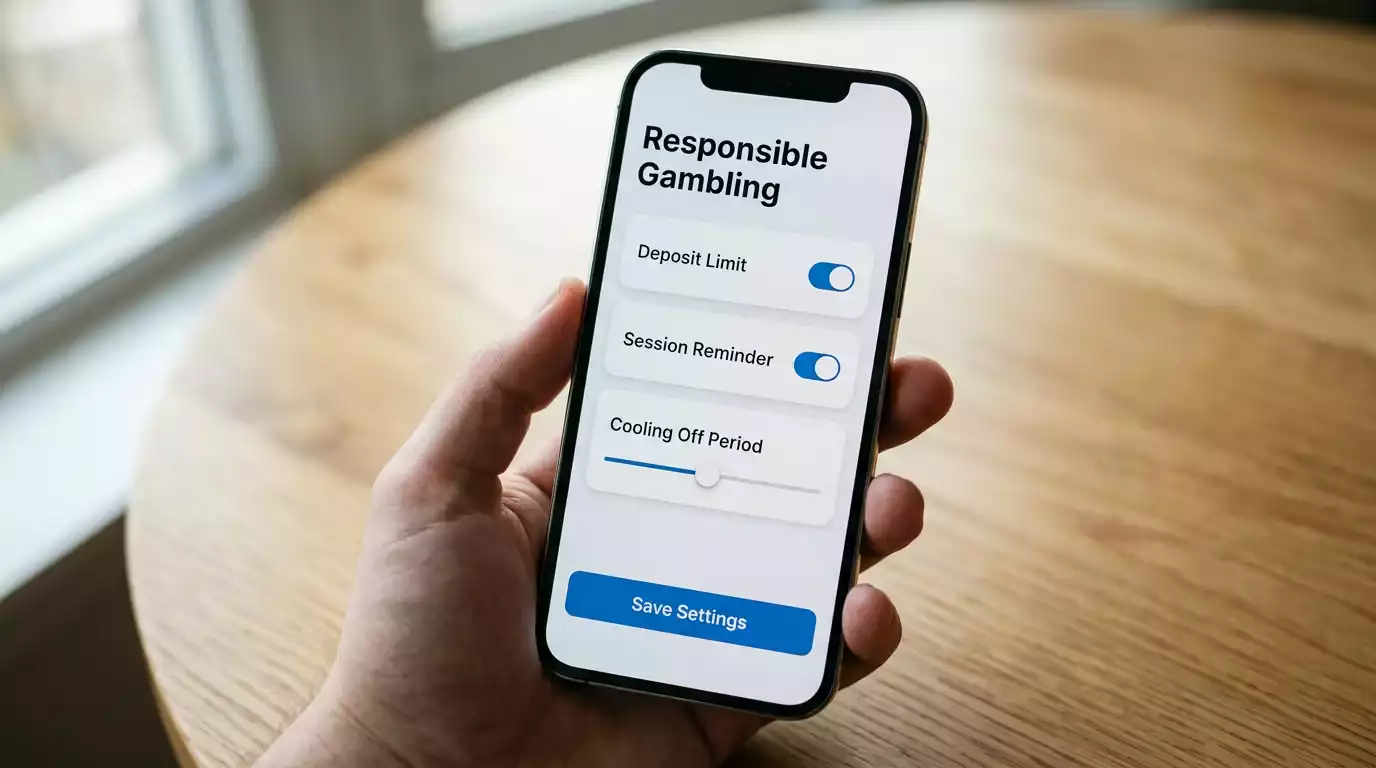
Setting a deposit limit on day one of a new account is the single most effective preventive measure available. A limit of £50 per week, set when the account is opened, is a £50 ceiling regardless of how emotional state shifts. The limit can be raised later — the 24-hour cooling-off forces the decision to be deliberate — but the default state is protective rather than open.
Time limits and time-outs work alongside the financial limits. Reality checks can be set to pop up every 30 or 60 minutes during a session. Time-outs let you suspend account access for 24 hours, a week, six weeks, or longer — a soft self-exclusion mechanism narrower than GamStop but useful for breaking specific patterns without committing to a six-month block.
The right mix varies by person. For most UK punters, a baseline of a weekly deposit limit plus reality checks every 30 minutes during active sessions provides meaningful protection without changing the betting experience materially. For punters at the GamStop threshold, the full self-exclusion is the right tool.
The national helpline and the charity network
The National Gambling Helpline runs at 0808 8020 133, free to call, available 24 hours a day. The line is operated by GamCare, the leading UK gambling-harm support charity. Calls are confidential and the advisors are trained specifically to handle gambling-related concerns — including from people calling about their own behaviour and from people calling about a family member or friend.
What the helpline offers practically: triage to appropriate support services, immediate counselling on the call itself if the caller needs it, referral to face-to-face or online treatment programs, and signposting to financial advice services where the gambling has produced debt issues. Many calls are exploratory — people checking whether their situation actually constitutes a problem.
GamCare itself runs treatment services beyond the helpline, including one-to-one counselling, group programs, and online support. The treatment is free and confidential. GamCare’s website at gamcare.org.uk has resources, self-assessment tools, and access to live chat with advisors.
GambleAware is the other major UK charity in this space. Its role is broader — public awareness, research funding, and signposting to treatment — and its website at begambleaware.org collates the full range of UK support services. For someone needing immediate confidential help, the GamCare helpline at 0808 8020 133 is the more direct route.
NHS treatment is also available. The NHS National Problem Gambling Clinic, based in London with regional clinics elsewhere, provides specialist treatment for severe gambling problems. Referral can be self-initiated through the clinic’s website or arranged through a GP. Treatment is free at the point of access.
If the concern is about someone else
About 10% of UK 18 to 24 year olds score 8 or higher on the PGSI — several times the general adult rate — and family members are often the first to notice. If you’re reading this because someone close to you appears to have a problem with UFC or other gambling, the routes are similar but adapted for third parties.
The National Gambling Helpline at 0808 8020 133 takes calls from concerned family members. The advisors can give guidance on how to approach the conversation, what to expect, and what resources to direct the person toward. They can’t intervene directly — the person who’s gambling has to be willing to engage with support — but they can prepare you for what useful intervention looks like.

GamCare runs specific resources for family members and friends, including a separate support stream for people affected by someone else’s gambling. The same website at gamcare.org.uk has the relevant materials. There are also peer-support groups for partners and family members, which can be useful for people who’ve spent months or years dealing with the consequences of someone else’s gambling and need their own space to process it.
The most important practical step for a concerned family member is usually the conversation itself — raised in a non-confrontational way, without ultimatums in the first instance, with a specific suggestion (calling the helpline together, looking at GamStop together, setting a deposit limit on the account together) rather than a vague request to “stop”. Concrete next steps are easier to commit to than open-ended changes. The broader picture of how UK regulation shapes the protective environment that surrounds these conversations is the subject of UFC betting UK regulation, which covers how operator responsibilities and consumer protections connect.
The stance that keeps UFC betting sustainable
Recreational UFC betting and problem gambling sit on the same spectrum, and the tools described here are designed to keep the experience on the recreational side of that spectrum. Deposit limits aren’t admissions that you have a problem. Reality checks aren’t paternalistic. They’re the structural protections that let UFC betting stay enjoyable across years rather than becoming a source of harm across months. Using them is the same kind of sensible discipline that applies to drinking responsibly, eating well, or any other activity where individual self-regulation is supported by environmental friction.
For UK punters, the support infrastructure exists. The helplines, the self-exclusion register, the deposit limits, the charity services, the NHS clinics — all of them are real and accessible. What they require from the individual is the willingness to use them, ideally before the problem becomes acute. The earlier the engagement, the easier the path back to entertainment-level betting. The later the engagement, the more support is needed — and the more support is available. There’s no situation where the system has run out of options for someone seeking help.

Does GamStop block UFC betting on sites I haven’t registered with yet?
Yes. GamStop is a cross-operator register, not an account-by-account block. Once you’ve registered, every UKGC-licensed gambling operator is required to check the register before allowing new account creation or login. That means you can’t create an account on a UK-licensed sportsbook you’ve never used before, and existing accounts on UK-licensed sites are blocked from access. The coverage extends to all UKGC-licensed online gambling, including UFC betting sites. The exception is offshore sites that aren’t UKGC-licensed — they don’t participate in GamStop and don’t honour the registration.
Can I keep my UFC betting account but lower the deposit limit to a very small amount?
Yes. Deposit limits on UKGC-licensed operators can be set to any amount you choose — including very small amounts like £5 or £10 per month if you want to keep the account active but ensure your exposure stays minimal. The limit applies to net deposits over the chosen period; once you’ve hit the limit, additional deposits are refused until the period resets. Setting a small limit can be a useful interim step for punters who recognise the early signals of a problem but aren’t ready to self-exclude entirely.
Prepared by the bet on ufc Fight editorial staff.