UFC Moneyline Strategy UK: Chalk Maths and ROI
 Available in US
Table of Contents
UFC Moneyline Odds and Divisional Overlay Staking
Moneyline is the first UFC market most British bettors ever look at, and it is also the one most professional analysts spend the longest on. That is not a contradiction. Picking the winner of a single fight is conceptually the simplest decision in MMA betting, and it is also the place where the bookmaker’s pricing is sharpest and your edge — if you have one — is most likely to be real. Everything else (method, rounds, props) builds on top of a moneyline view, so the discipline you bring to this market is the foundation for the rest.
What follows is about UFC moneyline strategy for UK bettors with no detours into method or rounds. I will cover when chalk earns its price, when the dog deserves attention, what divisional patterns matter, how to size your stake, and the traps that look like value but are not. The piece is opinionated because moneyline is the market where I have made and lost more money than any other in the last nine years, and the lessons have been earned twice over. The single biggest one is that the bet is not “who do you think will win”; it is “is this price wrong for who you think will win”.
The chalk question, asked properly
A UFC favourite priced at 4/6 means the bookmaker thinks they win 60% of the time. If you also think they win 60% of the time, there is no bet. If you think they win 65% of the time, there is a bet. The question is never “is this fighter the favourite?” — it is “is the favourite cheap or expensive at this specific price?”.
Three numbers anchor every chalk analysis. UFC favourites win in 65 to 70% of fights on a ten-year sample. Heavy favourites (anything 1/3 or shorter) win in roughly 80% of fights. Marginal favourites (anywhere between 4/5 and Evs) win in roughly 55% of fights. Compare your read of a specific matchup to those base rates before you click. If your model says the favourite wins 70% of the time and the price implies 60%, the dog is undervalued in absolute terms but the favourite is also fairly priced — meaning the bet is actually on the dog, not on the chalk.

The professionals’ rule of thumb: chalk earns its price when the matchup style aligns with the favourite’s strengths and the underdog’s path to victory is narrow. Chalk does not earn its price when the favourite has a single skill that is being neutralised by the underdog’s defence, regardless of how popular the favourite’s name is. The popularity of the favourite is irrelevant to the bet — only the matchup is. About 53% of UFC bouts end inside the distance, and chalk that depends on a finish path the underdog reliably defends against is overpriced even when it looks short.
The dog question, asked properly
Dogs are not a strategy. “Always back the dog” is not a system. Dogs win 30 to 35% of the time across the long-run UFC sample, and any blanket dog approach loses money at typical price levels. The dog question is matchup-specific: is this particular underdog underpriced relative to their actual winning chance?
The bias to watch for is recency. If a fighter has won three in a row, the public — and often the bookmakers — overprice them in their next outing. If a fighter has lost two in a row, the public overprices their opponent and the original fighter becomes the value dog in their third bout. The selection bias is real, and it cuts both ways depending on whether you are buying the hype or the falling knife.

Stylistic dogs — fighters whose specific tools neutralise the favourite’s path to victory — are the dogs that produce positive expected value over time. A wrestler against a striker who has historically struggled with takedown defence is the textbook example. A submission specialist against a fighter whose ground game leaks subs is another. The dog ROI in those specific cases is often positive even at unfavourable raw odds, because the underlying winrate exceeds what the implied probability suggests.
Divisional overlay matters more than people think
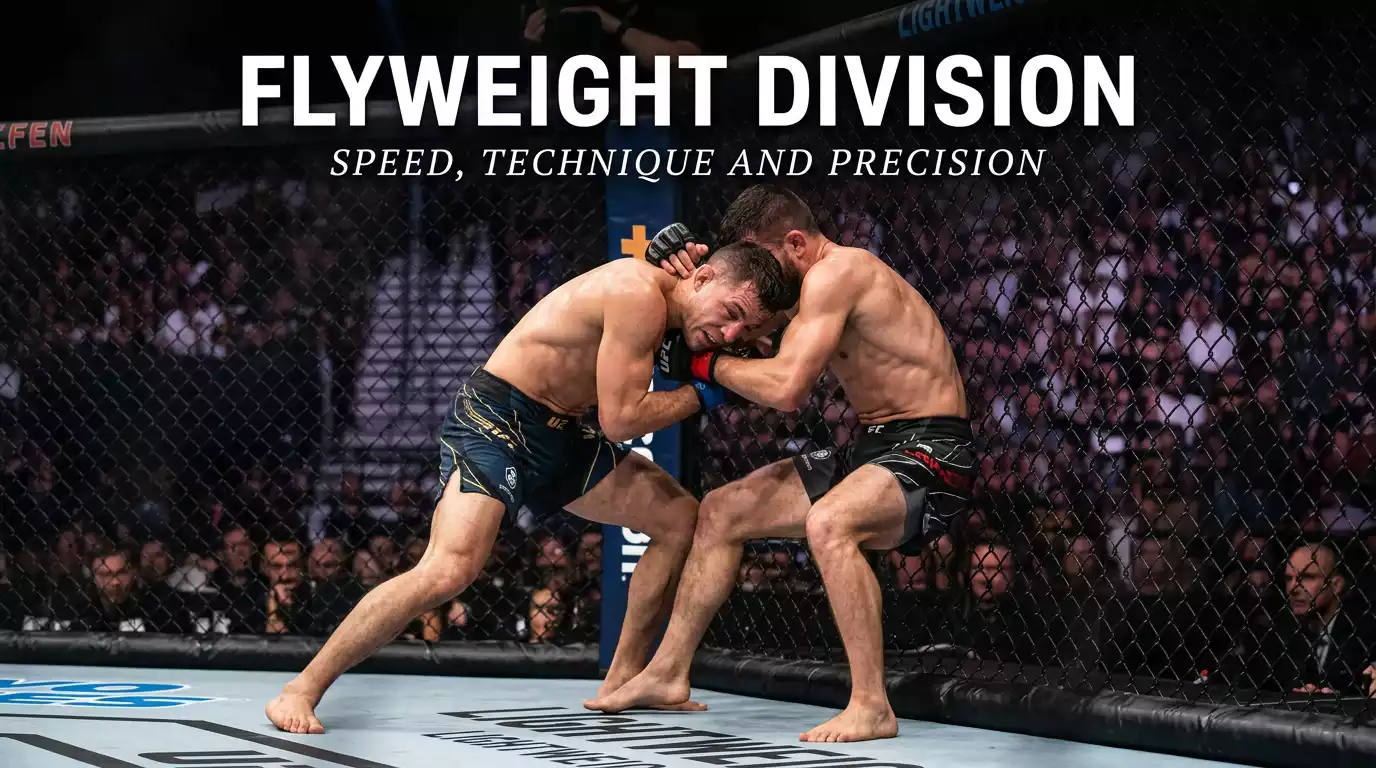
The 65 to 70% favourite winrate is the UFC-wide average. It hides huge divisional variance. In men’s flyweight, favourites have won 77% of fights since 2020 — a 30-8-1 record on the divisional sample. In men’s heavyweight, that number is closer to 60% because one-punch knockouts redistribute outcomes more chaotically.
The practical implication is direction-of-bet. In flyweight, the moneyline favourite is more reliable than the average, which means dog hunting in that division needs an even stronger matchup case. In heavyweight, the favourite is less reliable than the average, which means moneyline dogs in heavyweight have more inherent volatility on their side — but also more exposure to one-punch finishes that can go either way regardless of skill differential.
Bantamweight, featherweight and lightweight sit in the middle of the distribution. Welterweight skews slightly more favourite-friendly than middleweight, though the gap is small. Women’s strawweight and flyweight have produced erratic patterns historically, partly due to roster turnover and partly due to smaller sample sizes — treat these divisions with extra caution when projecting from the historical winrate. The divisional overlay is what separates a “I picked the favourite” bet from a “I priced this fight against the right base rate” bet. Our breakdown of the statistical patterns that actually predict UFC outcomes goes deeper into the divisional and method splits that shape these reads.
Staking method that does not blow up your bankroll
Most UK retail bettors stake the same amount on every bet — flat staking. Flat staking is fine. It is also boring, and the temptation to deviate is what kills bankrolls. Stick with it for the first six months of any new strategy.
The next level up is fractional Kelly. Full Kelly is a formula that tells you the mathematically optimal stake given your edge and the price, but full Kelly is brutally aggressive and most bettors cannot stomach the drawdowns. Quarter Kelly is the standard professional compromise: stake one quarter of what the formula recommends. The formula itself is straightforward: stake percentage of bankroll = (b × p − q) / b, where b is decimal odds minus 1, p is your probability estimate, and q is 1 minus p. Multiply by 0.25 for the conservative version.

For most British UFC bettors with a £1,000 bankroll and an edge they cannot prove yet, my advice is flat 1% stakes — £10 on each bet — until you have 50 settled bets and a CLV figure to look at. If CLV is positive, scale to 2% per bet. If it is negative, drop to 0.5% and treat the next 50 as recreational rather than analytical. Bankroll management protects you against the variance that 65 to 70% favourite winrates impose on any short-run sample.
Common traps in moneyline reads
The “hype train” trap: a young fighter wins three highlight-reel finishes in a row, the price on their fourth fight shrinks to 1/3, and the bettor backs them because the brand has built up. Three fight samples are not predictive. The opponent’s quality matters more than the win streak, and the price is usually shorter than the underlying probability deserves.
The “veteran name” trap: a long-tenured fighter with name recognition is priced as a favourite against a young, less marketed opponent. The fight metrics often suggest the opponent should be the favourite, but the market drags the veteran’s price down on the back of recognition. The dog in this scenario is regularly the value play.

The “card position” trap: main event fighters are often priced sharper than prelim fighters because more money flows on the headliner, which means the prelim card is where line errors hide. If you are looking for moneyline value on a UFC card, the prelim slot is often a better place to spend research time than the main event — counterintuitive, but reliable across years of data.
Building moneyline into a longer-term approach
A moneyline-only strategy can be profitable in the UK over the long term if your edge is real and your bankroll discipline is steady. It will not be glamorous, and the variance will hurt across any 20-fight window. The 65 to 70% favourite winrate means that a moneyline bettor who picks favourites exclusively will run hot for two months and cold for two months, and the cumulative result will reflect the bettor’s actual edge over the bookmaker — not the most recent streak.

What I tell people who ask me whether moneyline is “enough”: yes, it is enough, if you do nothing else. Adding method-of-victory or props on top of moneyline adds volatility and gives the operator more margin to work with. The cleanest version of UFC betting for the first year is moneyline only, flat stakes, multiple operators for price shopping, CLV logged across at least 50 bets before any strategic change. After that year, you have the foundation to decide whether you want to add complexity. Most UK bettors who chase complexity in year one never get the moneyline read right and end up paying both kinds of margin without earning either.
Can a UFC moneyline strategy be profitable long-term in the UK without picking method bets?
Yes — if your edge in identifying mispriced moneylines is real and consistent. Moneyline alone removes the additional margin operators bake into method-of-victory and round markets, so a moneyline-only strategy with positive expected value can compound at lower volatility than a multi-market approach. The constraint is the discipline required: you have to log CLV across at least 50 bets to confirm the edge exists, and you have to resist adding markets that feel exciting but dilute the per-bet expected value.
How do I find the true probability versus the bookmaker’s number?
Build a probability estimate from the matchup itself — striking output differential, takedown accuracy and defence, recent form against comparable opposition, divisional finish rates — then compare your figure to the implied probability of the line. The gap between the two is your edge or your error. If your estimates consistently beat the closing line by 3 to 5 percentage points, your model has a real edge. If they trail the closing line, the model needs revision or you are betting on instinct that does not survive contact with the market.
Prepared by the bet on ufc Fight editorial staff.