
UFC Futures Outright Betting UK: Title Winner Odds
 Available in US
UFC Championship Futures and Long-Term Title Bets
I have a 12/1 outright on a UFC bantamweight champion still alive from a position I opened in March. It will not settle until December. That bet is doing nothing for nine months of the year — and that is the trade-off you accept on futures. You give up capital flexibility for the chance at a longer-priced settle than any single-fight market can offer. Done badly, futures are dead money sitting in a slip. Done well, they are some of the best-value bets a UK UFC bettor can find on the calendar.
This piece is about UFC futures and outrights from a UK perspective: champion-by-year-end markets, fighter of the year and other awards markets, year-end positions, and the practical reality of having capital locked up for months at a time. I will not pitch futures as a primary strategy — they are too illiquid and too long-runtime for that. But for a UK bettor who has worked out single-fight markets and is looking for season-long angles, the futures slate offers structural value that single-fight pricing cannot match. Treat futures as a small percentage of your annual betting bankroll and an enhancement, not a primary product.
Champion markets and how they price
Every UFC division has a champion-by-year-end market open most of the year. The reigning champion is the chalk, typically priced anywhere from 1/2 to 2/1 depending on how dominant their recent run has been and how many serious contenders are within striking distance of a title shot.

The contender prices are where the variance lives. A clear number-one contender booked for a title fight in the next three months is usually priced at 6/4 to 3/1, depending on the matchup. A number-two or number-three contender with no title shot scheduled but a clear path is priced at 5/1 to 12/1. Deeper contenders, especially fighters with one win away from a title shot, sit at 20/1 or longer and represent the genuine value end of the market.
The pricing inefficiency: champion markets are heavily weighted toward the current title holder because the public bets the current champion’s name. Contender prices, especially deeper contenders, often diverge from their true probability of holding the title by year-end. If your read says a number-three contender has a 15% chance of being champion by 31 December (because they are likely to receive and win a title fight within the year), and the price implies 8%, that is a value bet — even if the absolute probability is low.
Awards markets — Fighter of the Year and friends
Fighter of the Year, Fight of the Year, and other annual awards are seasonal markets that settle around early January after the UFC announces its year-end honours. These are pure narrative markets — they reward fighters who had memorable years rather than fighters who had statistically dominant ones.

UFC PPV buy figures from 2024–25 give a sense of where the public attention concentrates: UFC 300 at 615,000 buys, UFC 311 at 240,000, UFC 312 at 176,000. The fighters on the highest-buying cards are typically the favourites for awards because they had the biggest stages. A fighter who fought twice in 2025 on stacked Numbered Events will out-price a fighter who fought three times on smaller Fight Nights, regardless of the underlying quality of their performances.
Where awards markets can be value: when a fighter has a quiet but dominant year with consecutive finishes against ranked opposition, the public underweights them in the Fighter of the Year pricing because they did not generate as much media noise as the headline names. If your structural read is that the awards voters reward sustained dominance, the quietly-dominant fighter is the value play in October when the public is still chalking the loud names.
Year-end positions and settlement rules
Most UFC futures settle at the end of the calendar year — 31 December — and the operator’s terms specify whether interim title changes, fighter retirements, or division reshuffles trigger settlement or void. The standard UK operator rule is that the bet settles based on the situation as of midnight on 31 December: who holds the title, who won the official award, what the ranking looks like.
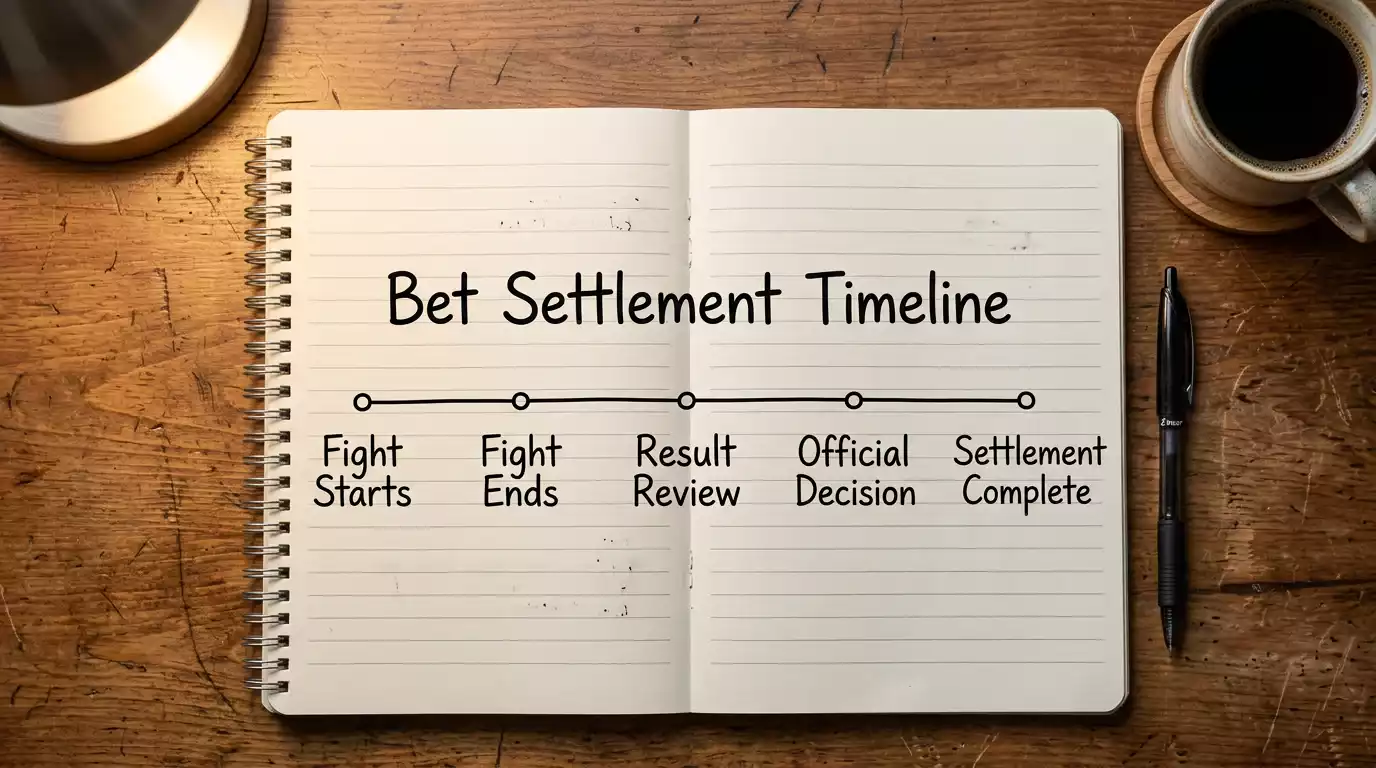
The non-standard situations are where bettors get caught. A title that becomes vacant (the champion retires or is stripped) usually voids “Champion by year-end” bets, with stakes returned. A title that changes hands and then changes back within the year settles on the situation at year-end, regardless of intermediate switches. A fighter who retires before year-end with the title still held usually settles as the year-end champion, but the operator’s specific T&Cs vary.
Read the futures market terms before betting. UK operators publish the settlement rules in the futures section of their FAQ pages, and the variance between operators is real. A 12/1 outright at one operator with strict settlement rules can be a different bet from a 12/1 outright at another operator with looser rules. Match the price to the rules, not just to the headline number.
Liquidity and operator stake limits
Futures markets are less liquid than single-fight markets, which means operators apply lower stake caps. Where a UFC single-fight moneyline might allow stakes up to £5,000 with most UK operators, the same operator might cap a year-end title outright at £200 to £500. The cap protects the operator against the long-runtime variance of the bet and against the risk that public information emerges months later that they cannot price into.

The cap tightens as the year progresses. A “Champion by year-end” market open in March may allow £500 stakes; the same market in October, when fewer title fights remain, may cap at £100. As more information becomes available (which contenders are scheduled, who has been injured), the operator’s price has less room to move and the variance compresses — but so does the available capacity.
This shapes how a UK bettor should sequence futures bets. The bigger stakes are available early in the year when the operator’s margin is widest and your information is thinnest. The sharper bets are available later in the year when the operator has tightened the line but the cap is also lower. For most retail bettors, the early-year window is the practical opportunity — even though the late-year line is closer to fair value.
Risk and tied-up capital
A futures bet ties up capital for the full settlement period. A £200 stake on a year-end outright in March is £200 you cannot use on a single-fight bet for the next nine months. The opportunity cost is real: if your single-fight betting averages 4% expected return per bet, the £200 in a futures position is foregoing roughly £100 of expected single-fight profit over the year (assuming you would have re-staked it across multiple bets).
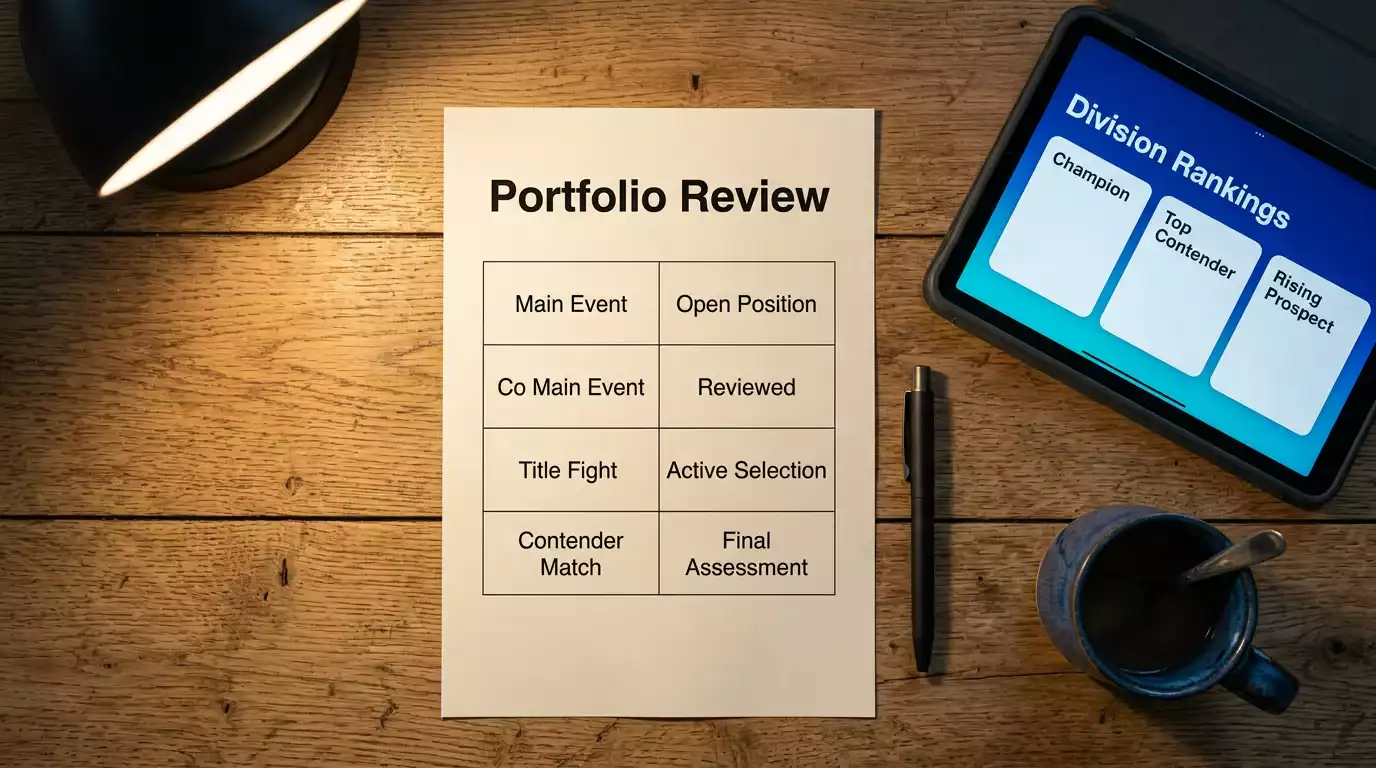
The implied requirement for a futures bet to make sense is that its expected value exceeds the foregone expected value of using the same capital on single-fight markets. A 12/1 outright with a 15% true probability has positive expected value (1.80 against the staked 1.00), but the comparison is to single-fight bets with positive expected value of their own. The futures bet has to clear that higher bar to be worth tying up the capital.
The practical rule for most UK UFC bettors: futures should represent no more than 10 to 15% of your total annual betting bankroll. Anything more and you are over-allocating to long-runtime positions and starving your single-fight bankroll of capacity. UFC London 2026 betting is the kind of single-event focus where the same capital is more productive across a fight week, and futures should not crowd out that flexibility.
What good UFC futures betting looks like
The disciplined UK UFC futures bettor opens positions early in the year, on contenders with clear paths to title fights, at prices that reflect a structural mispricing rather than a guess. Three to five futures bets a year, totalling 10 to 15% of bankroll, is enough to capture the available edge without locking up too much capital. Awards markets are smaller positions — typically novelty-priced and harder to model — taken when a specific narrative case is strong rather than as a regular allocation.

The temptation to chase outright markets when single-fight betting is going badly is the most expensive mistake on this market. Futures are not a recovery vehicle. They are a calm, considered, low-frequency allocation that complements your single-fight book. Treat them that way and they earn their place in a UK bettor’s annual portfolio. Treat them as a slot machine for “the big one” and they drain capital quietly for nine months while you ignore the better-value bets on Saturday’s main card.
What happens to a UFC futures bet if a fighter is stripped of the title?
Most UK operators treat a stripping as if the fighter never held the title for the purposes of year-end settlement. If your futures bet was on the stripped fighter to be champion at year-end, the bet typically loses or is voided depending on whether the title becomes vacant or is transferred to another fighter. If the title transfers to another fighter and your bet was on them, the bet settles as if they had held the title at year-end. The exact wording is in each operator’s futures T&Cs and varies between books — worth checking before betting on a fighter whose title status is contentious.
Can I cash out a UFC year-end futures bet early?
Some UK operators offer cashout on year-end futures, but the margin is significantly wider than on single-fight bets — often 15 to 25% rather than the 8 to 15% on standard cashout. The operator is pricing in the additional information uncertainty between now and settlement, and they apply a steeper margin to compensate. For most year-end positions, holding the bet to settlement is the cleaner play unless your forward-looking probability estimate has shifted dramatically since you opened the position.
Prepared by the bet on ufc Fight editorial staff.