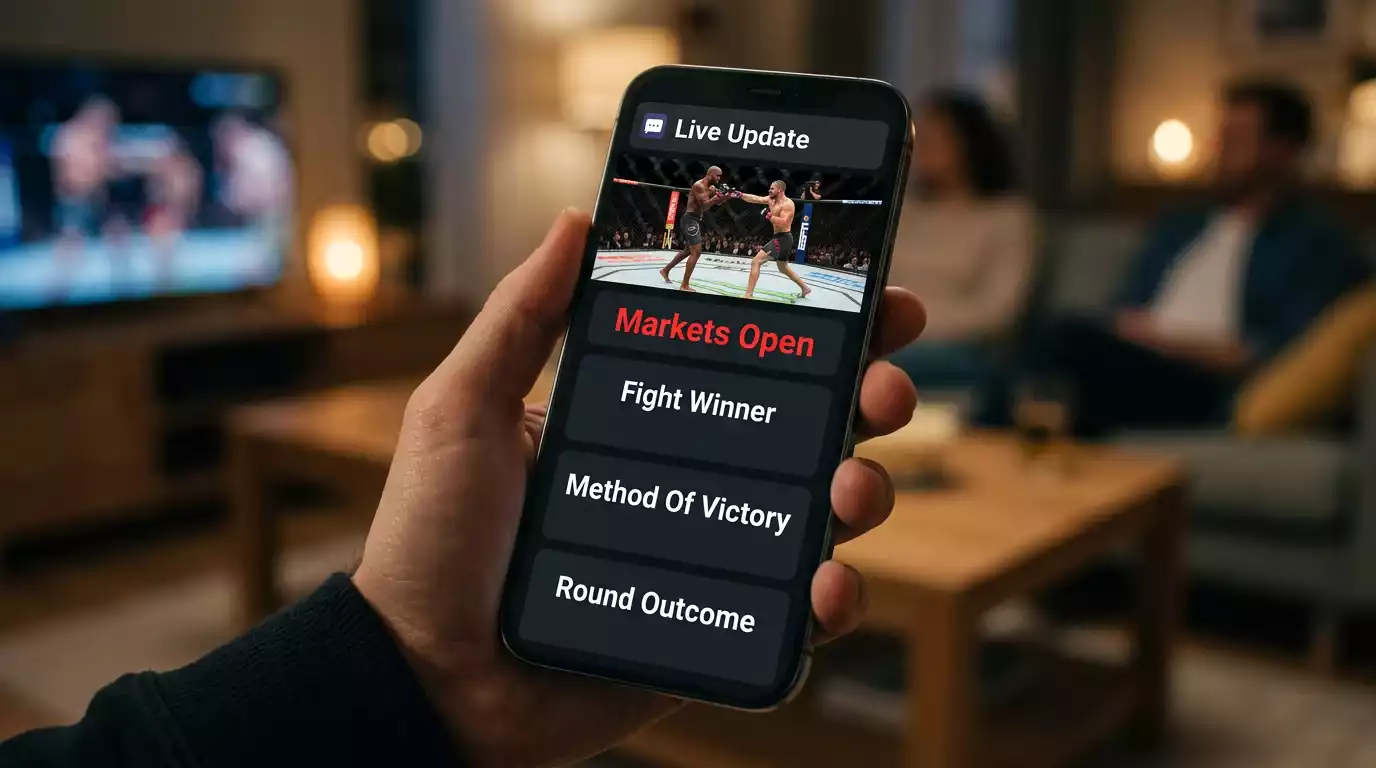
UFC In-Play Betting UK: Live Odds and Round Data
 Available in US
Executing Live UFC Bets During 60-Second Breaks
The first UFC in-play bet I ever placed was a between-rounds moneyline on a featherweight prelim I had been watching at 4am UK time. The window from when the operator opened the market to when it closed for round two was about 55 seconds. I got the bet in with maybe eight seconds to spare. That memory shaped how I think about UFC in-play to this day: it is the most time-pressured market on the slip, and the discipline is mostly about not betting in those seconds rather than about clicking faster.
This piece is about UFC in-play betting from the UK perspective. I am not writing a general live-betting guide — those exist elsewhere, and the football frame does not translate well. UFC live betting has its own rhythms, its own market windows, and its own behavioural risks. The market opens between rounds and stays open for a brief, structured period; the way to read it is fundamentally different from in-play football where the line is continuous. UK operators have built decent UFC in-play products, but the impulsivity risk is acute and worth naming up front.
When markets actually open
UFC in-play markets follow a fixed pattern that the major UK operators all use, with minor variation. Between rounds — during the one-minute break — moneyline, round-specific and method-of-victory markets reopen with updated prices reflecting what just happened in the previous round. The window is brief: typically 45 to 60 seconds, with the markets locking again as the next round buzzer sounds.
During the round itself, most markets are closed. A few operators offer “fight ongoing” propositions during the round — current-round finish probability, next-action markets — but these are rare on UFC compared to football. The volume of UFC in-play action sits in the between-rounds window, and that is where you should focus your attention.
Some markets remain closed even between rounds: futures, outrights, season-long bets. The between-rounds reopening is for single-fight markets that respond to the round you just watched. UFC events generate 11% of all live-bet clicks on the major platforms during fight nights, which gives you a sense of the volume that the major operators handle in these short windows.
Reading the corner without overreacting
The 60-second break between rounds is when the corner gives instruction, the cutman works on swelling, and the fighter’s posture tells you whether they are recovering or fading. UK bettors making in-play decisions in this window are reading the corner whether they realise it or not — body language, breathing rate, what the cornerman is saying with what urgency.
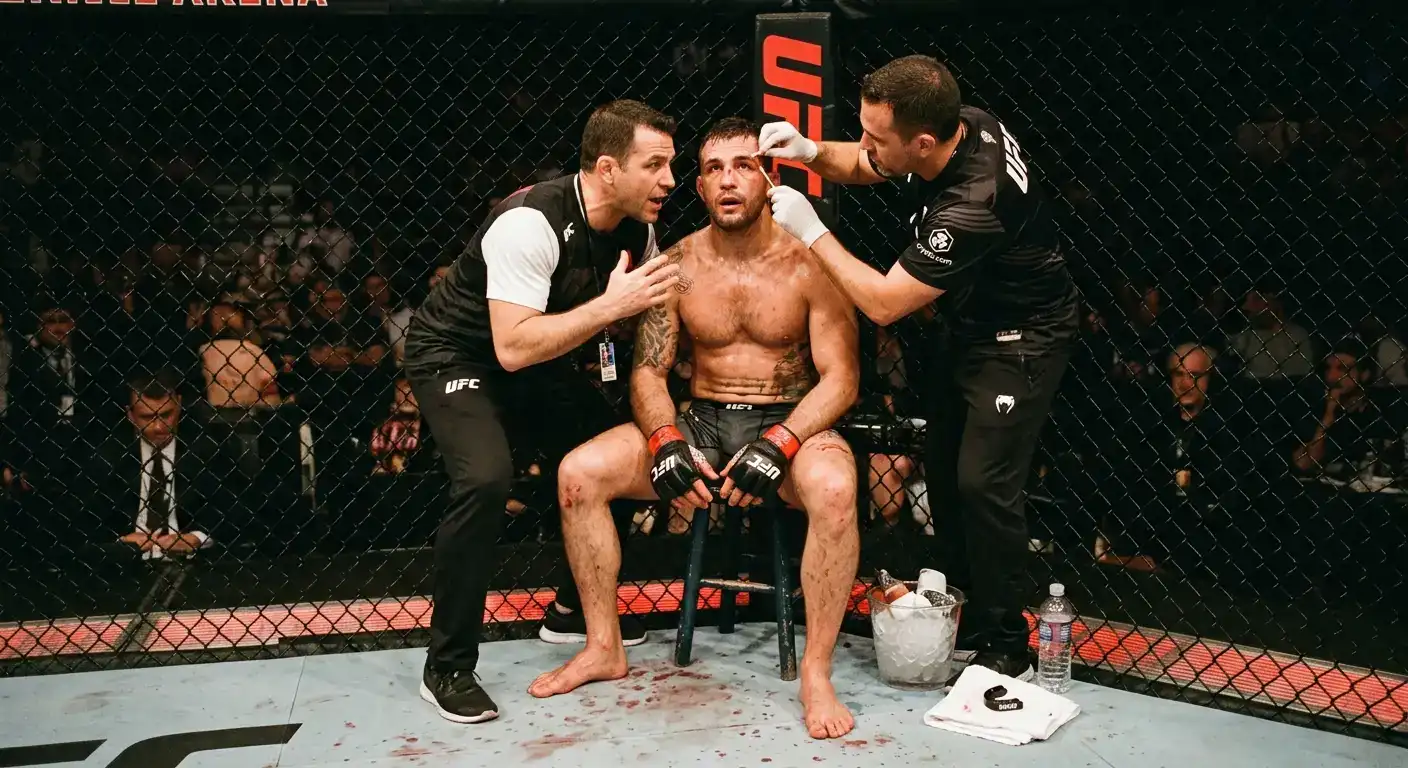
What to look for. A fighter sitting upright on the stool with hands on knees, breathing controlled — recovered. A fighter slumped, head hanging, breath ragged — in trouble. A corner speaking calmly and giving tactical adjustments — confident in the round won. A corner shouting and visibly stressed — losing the fight in their assessment. None of this is conclusive, but the cumulative read of a corner over two or three rounds tells you something the official scorecards may not.
What to ignore. Bravado. A fighter standing up and pacing during the break may be performing for the camera rather than indicating actual freshness. A corner that is theatrically calm is sometimes a corner that has given up on adjustments. Read against the previous round’s actual data — significant strikes landed, takedown attempts, control time — not against the visual performance of confidence.
Momentum versus noise
The classic in-play mistake on UFC fights is betting the momentum of the round that just ended without filtering for noise. A fighter lands a flush left hook in the last fifteen seconds of round one; the operator shortens their moneyline; the bettor backs the new favourite. Half the time, that left hook was an isolated event in an otherwise even round, and the underlying matchup has not actually changed. The price has moved on a single visible moment, not on a structural shift.

The filter that separates real momentum from noise is duration and repetition. One flush hook in fifteen seconds is noise. Three consecutive minutes of one-sided striking is signal. One takedown attempt is noise. Three completed takedowns with extended control time is signal. The operator’s price reacts to the most visible event of the round, which is usually the one that does not survive into the next round. Your job is to read whether the visible event was a sustained pattern or a momentary flash. About 41% of UFC men’s bouts end before the 2.5 round mark — meaning sustained patterns do convert into finishes when they are real, but the impulsive moneyline shift on a single flash event is rarely the right bet to chase.
Discipline and pace, especially across the card
The single best rule I have ever followed for UFC in-play betting is “only one in-play bet per round, and only when the structural read genuinely changed”. That rule does two things. It limits exposure to the variance that compounds across multiple impulsive bets, and it forces you to consciously decide whether the read changed enough to warrant a new bet — rather than betting because the window is open.

Across a 12-fight UFC card with three rounds per prelim and five rounds per main event, there are potentially 45 between-rounds windows where in-play markets reopen. Betting in every window is exhausting and expensive. Betting in three or four windows where the structural read genuinely changed is a tractable discipline. Andrew Rhodes at the UK Gambling Commission described the Gambling Survey for Great Britain as “a key building block of the evidence base which helps government, industry and other partners understand both gambling behaviour and potential consequences from gambling” — and behaviour data shows that in-play frequency correlates with riskier gambling overall. Reading the evidence base is the same intellectual exercise as reading the corner: filter signal from noise.
The mechanic I use: at the start of a fight, write down on a piece of paper or in my phone notes the three structural changes I would actually bet on if they happened. “Takedown defence collapse”, “first-round knockdown”, “five-minute pace shift” — those are bet-triggering events. Anything else, I do not bet. If the three triggers fire, I bet at most once per trigger. If none fires, the in-play market closes on me without action and that is a successful fight from a discipline perspective.
Responsible live betting in practice
UFC in-play is the highest-impulsivity market on the slip. The combination of late-night fight times, alcohol consumption among UK viewing audiences, and 60-second decision windows produces conditions where impulsive bets compound quickly. Around 10% of UK adults aged 18 to 24 are classified as problem gamblers (PGSI 8+), and live combat sports betting is one of the activities most strongly associated with the impulsive end of that spectrum.
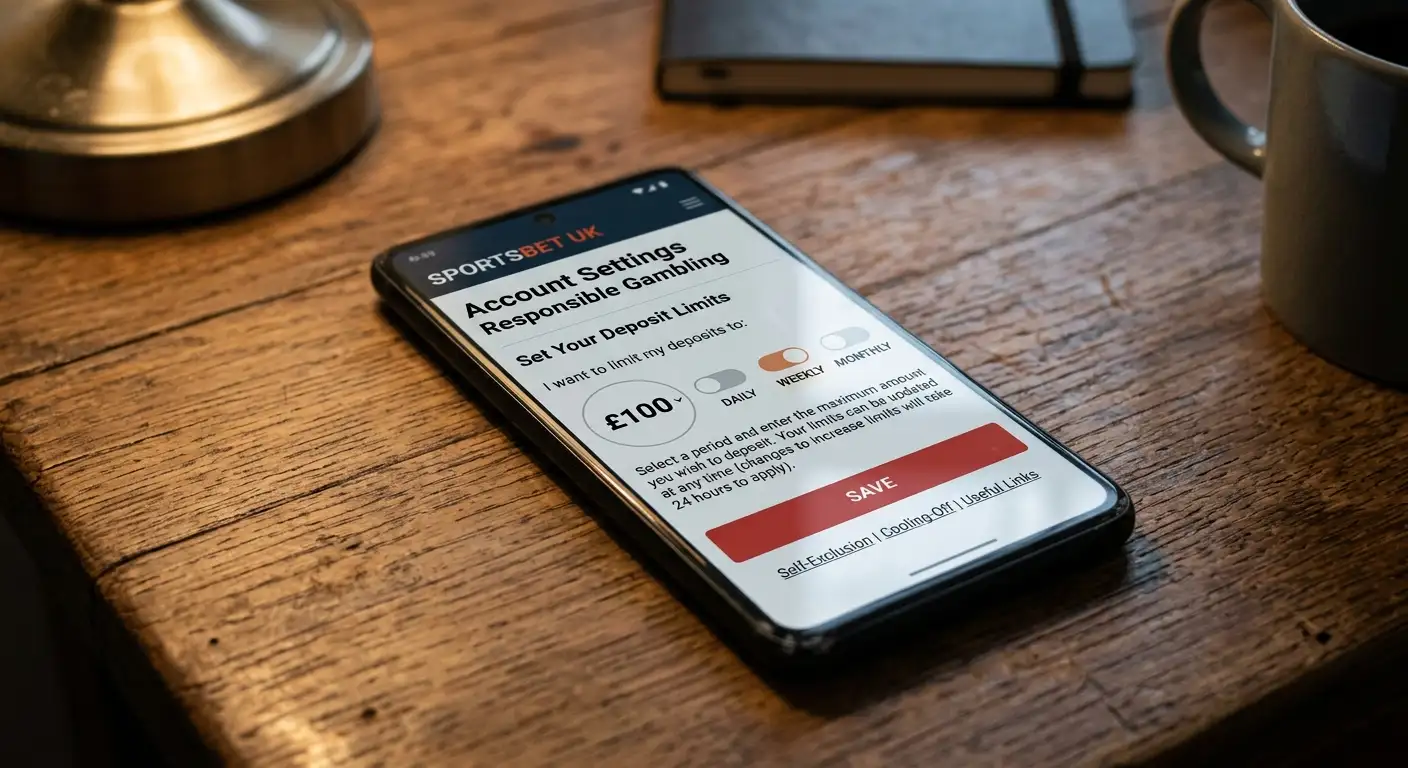
The practical mitigation is to set pre-fight deposit and session limits on your UK app before the card starts. Most UKGC-licensed operators have these tools built in — daily deposit limit, time-out, session reminder. Use them before the card, not during. A limit set during the card after you have already chased two losses is psychologically harder to enforce than a limit set during the day before any betting has happened. Cashout discipline overlaps with this — if you are tempted to chase losses on in-play, the cashout function exists to settle existing bets without doubling down, and our coverage of when cashout pays and when it does not goes into the mechanics of that tool in detail.
What a disciplined UFC in-play session looks like
The disciplined in-play UK bettor watches the round, reads the corner, and bets only when the structural read genuinely shifted. Most rounds, that is no bet at all. Across a full card, three to five in-play bets is the typical maximum for a bettor focused on edge rather than entertainment. Stake sizes are usually smaller than pre-fight bets because the variance is higher and the analytical window is shorter. The session ends when the card ends, not when the limit ends. If the limit got hit, the discipline failed earlier; the lesson is for next time, not for catching up on this card. In-play has real edge available to bettors who do less of it; the trap is that the product is designed to encourage doing more.

How fast do UFC in-play markets update on UK apps?
The major UK apps update odds between rounds within roughly 5 to 15 seconds of the round bell, with the market then staying open for the rest of the one-minute break. The exact latency depends on the operator’s odds feed and the device the bettor is using. Native iOS and Android apps are typically faster than progressive web apps; web browser betting is the slowest of the three. For high-volume bettors, the latency difference can matter on the price they take in the first ten seconds of the window.
Are between-rounds bets the safest live UFC bet for beginners?
Between-rounds bets are the most structured live UFC market because they open and close on a fixed schedule, which removes the always-open continuous-betting pressure of in-round propositions. That said, safer does not mean profitable. The brief 60-second window encourages impulsive decisions, and the operator’s overround on between-rounds moneylines is wider than the pre-fight equivalent. Beginners are better served by pre-fight betting and only stepping into in-play when they have a specific structural read that the round actually changed.
Created by the ”bet on ufc Fight” editorial team.