
Best UFC Betting Sites UK: Bookmaker Odds and Payouts
 Available in US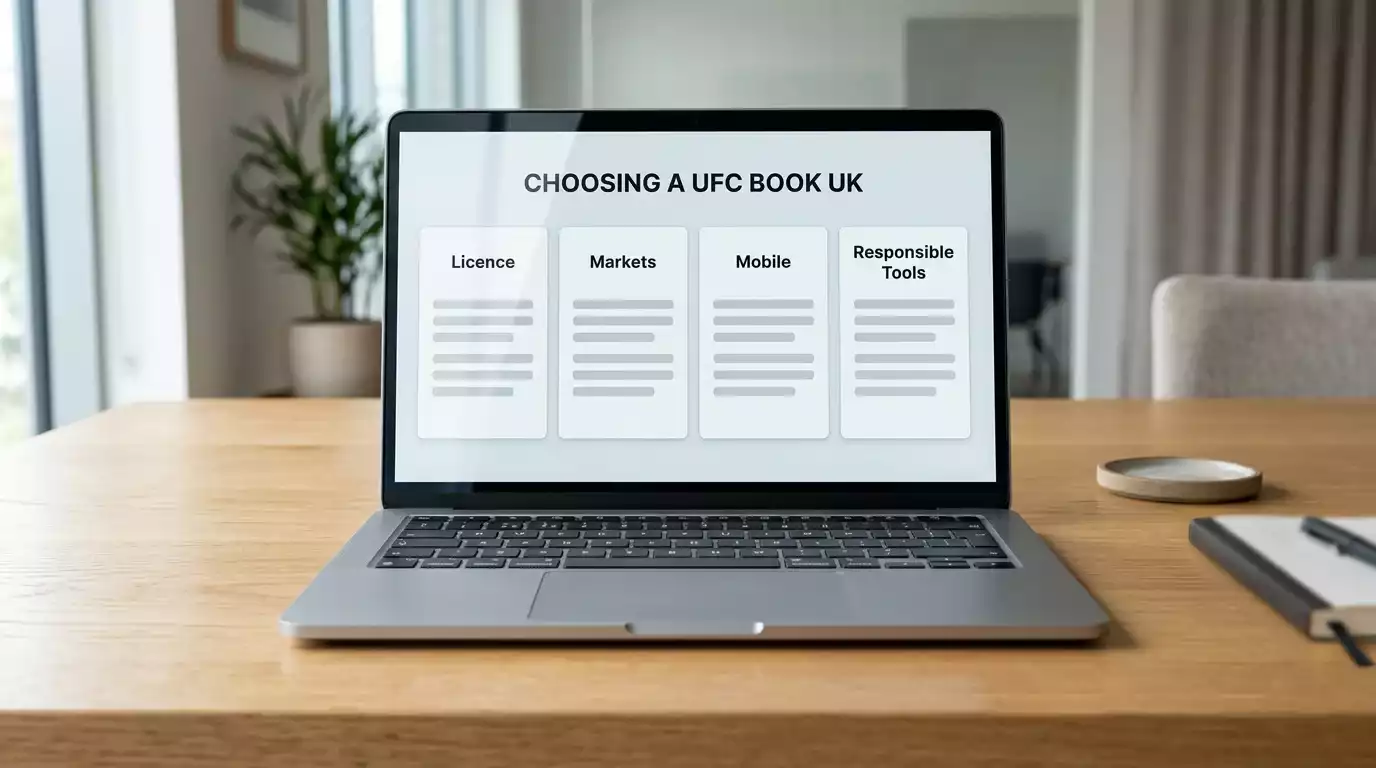
Table of Contents
- Evaluating UKGC UFC Betting Sites and Market Depth
- The UKGC Licence: Non-Negotiable Before Anything Else
- How Deep Does A UK Operator Run On UFC Markets?
- Pricing Quality: Reading The Overround Between Two Sites
- Responsible-Gambling Tooling You Should Expect Standard
- Payment Methods And The KYC Walk
- Mobile Experience On Fight Night
- Side-By-Side: How The Biggest UK Books Stack Up
- Red Flags That Should End A Sign-Up Right There
Evaluating UKGC UFC Betting Sites and Market Depth
I get asked weekly which is the “best” UFC betting site in the UK. The honest answer, after nine years inside this industry, is that there isn’t one. There are about a dozen ufc betting sites uk that operate at acceptable standards under the Gambling Commission, and the right one for you depends on what you actually want to do with your account — chase live markets on a Saturday night, build complex bet builders on Numbered Events, or just back the occasional favourite at competitive prices. The framing of “best site” comes from affiliate ranking content, not from anyone who has actually priced and risked these books for a living.
This article is the opposite of an affiliate ranking. There are no stars. There is no top-three list. There is no “our pick” tucked into the sidebar of an SEO funnel. What I will do is give you the framework I’d hand to a friend who’d just moved to the UK and asked me where to open a UFC betting account. That framework is a checklist of criteria — licensing, market depth, pricing quality, responsible-gambling tooling, payments, mobile, and a few red flags — and a side-by-side table comparing how the biggest UK books actually stand on each.
The reason this matters: the UK is a regulated market with genuine consumer protections, but those protections only apply if you stay inside the licensed perimeter. The UK Gambling Commission oversees 8,148 licensed gambling premises in the country, of which 5,669 are betting shops, and roughly two dozen substantial online sportsbooks. Step outside that perimeter — into the £16.6 billion offshore market that has grown from £5 billion in 2019 — and you lose every protection the licensing regime is built to provide. The first criterion is not “which book has the best UFC bet builder”. The first criterion is whether the book is licensed at all. Everything else is conversation.
The UKGC Licence: Non-Negotiable Before Anything Else
Andrew Rhodes, the chief executive of the UK Gambling Commission, spoke at the Betting and Gaming Council AGM in February 2025 and noted that total gross gambling yield in Britain had reached its highest-ever level at £15.6 billion, with participation stable at 48% — just under half of the adult population in Great Britain placing some kind of bet. That figure has continued to climb. The point is that the regulated UK gambling industry is enormous, mature, and well-policed, and the licence behind it is the single most important consumer protection any UK bettor has.
The UKGC licence does several specific things. It legally binds the operator to UK regulations on age verification, anti-money-laundering checks, responsible-gambling tooling, advertising standards, and dispute resolution. It places the operator on a public register that you can search by name to confirm the account number, the registered company, and the operating status. It gives you access to the independent UKGC complaints process if the operator behaves badly. It guarantees that the operator has segregated customer funds — your deposits are held separately from the company’s operating capital, so a corporate collapse does not vaporise your balance. None of these protections exist on an unlicensed offshore site.
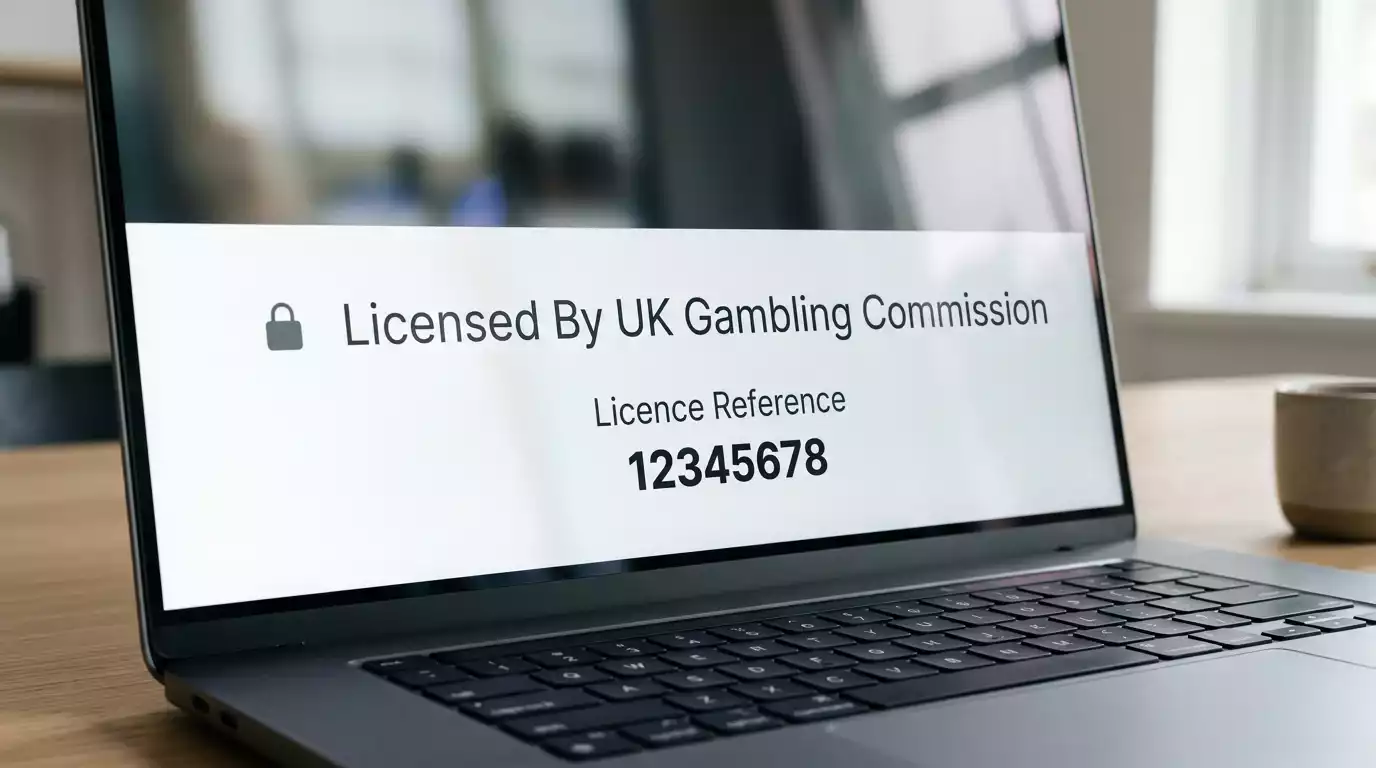
The licence number sits in the footer of every licensed UK operator’s website. It should be a clearly displayed account number, often eight digits, with the company name and the UKGC reference text. If you can’t find it on a site claiming to be UK-licensed, that is a hard stop. The legitimate operators put the number front and centre because they want you to see it.
The offshore market grew because some bettors think they’re getting better odds or a smoother experience by stepping outside UKGC. Two things to know about that perception. First, the better odds claim is often illusory — offshore operators don’t pay UK gambling duty, so headline prices look more generous, but the underlying overround is frequently wider, and the practical experience of getting a withdrawal can be miserable. Second, the protections you give up are real. No segregated funds means your balance is part of the operator’s working capital. No UKGC complaints process means a dispute goes nowhere if the operator decides to ignore you. No mandated GamStop integration means the self-exclusion register you may have signed up for does not bind the offshore site.
The first filter on any UFC betting site is therefore not “what markets do they offer”. It is “do they hold a current, in-good-standing UKGC operating licence, and can I verify that on the public register”. Every operator I’m about to discuss in this article meets that bar. The full mechanics of how to run a UKGC verification yourself — what to type, where to click, what numbers to compare — are laid out in a dedicated walkthrough of the UKGC licence check for UFC bettors.
How Deep Does A UK Operator Run On UFC Markets?
Once you’ve cleared the licensing bar, the next question is depth. UFC market depth at a UK operator means three things: how many distinct markets the book offers per fight, whether those markets cover all card positions (main event through early prelims), and how robustly the secondary markets are populated.
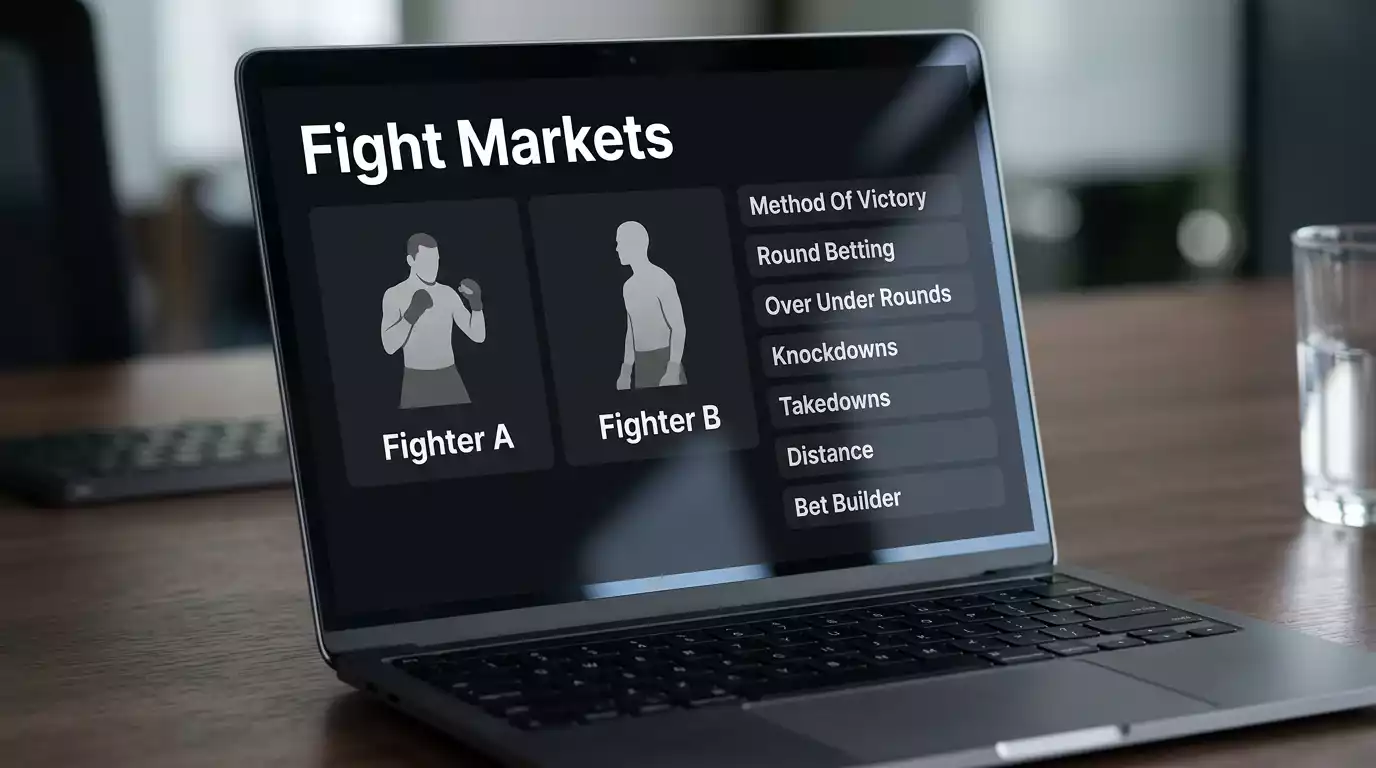
The deep operators in the UK on UFC will typically offer between 60 and 90 distinct markets on a Numbered Event main event. That number drops to 30 to 50 on co-main, 20 to 35 on featured undercards, and 10 to 20 on early prelims. The full menu includes moneyline, method of victory in full granularity (KO/TKO, submission, decision for each fighter), round-by-round, over/under rounds, knockdown props, takedown props, significant strike props, distance props, builder availability, and sometimes specials like fighter-of-the-night markets when the operator wants to make a splash.
The shallower operators will offer 30 to 50 markets on the main and stop at 5 to 10 on the prelims. They are not bad operators — they’re making a structural choice to concentrate liquidity on the most-traded markets and avoid the risk of taking thinly-priced exotic bets. But if you want to spread your action across the full card with creative props on the prelims, a shallow operator will frustrate you.
The bet365 deal with UFC, announced in March 2026 as the official sports betting partnership for the US and Canada, has visible downstream effects on the UK arm of the same operator. The integration of odds into UFC broadcasts, the in-cage market promotions, and the expanded prop list on Numbered Events are all consequences of that partnership. Other UK operators do not have that branded-integration advantage, but several of them have meaningfully expanded their UFC builder and prop lists over the last 18 months in response to the partnership news.
The simple test for market depth on any UK book: open a recent UFC Numbered Event main on their site, count the markets listed, and then click into a prelim from the same card and count those. If the main has 70-plus and the prelim has 30-plus, the operator is invested in UFC. If the main has 30 and the prelim has 8, the operator is treating UFC as a secondary product. Neither is wrong; they’re just different.
One more depth dimension worth checking: Fight Night versus Numbered Event coverage. Numbered Events get the full treatment from every operator. Fight Nights, which run more frequently and draw lower public attention, sometimes get a stripped-down market list at the smaller operators. If you bet UFC seriously, you bet Fight Nights as much as Numbered Events. Pick an operator that treats both card types with equal market depth.
Pricing Quality: Reading The Overround Between Two Sites
Pricing quality is the hardest criterion to evaluate from the outside because it requires you to do the maths yourself. The shortcut is overround comparison on the same fight at two operators. Take any UFC bout you can see priced on two UK books, convert both sides to decimal, calculate the implied probability on each, sum them, and compare. The operator with the lower total overround is offering you a better price on that bout — full stop.
A worked example. Suppose Operator A prices a moneyline at 4/6 favourite and 11/10 dog. Convert: 4/6 is decimal 1.67, 11/10 is decimal 2.10. Implied probabilities are 1/1.67 = 59.9% and 1/2.10 = 47.6%. Sum: 107.5%. Overround is 7.5%. Operator B prices the same fight at 4/7 favourite and 6/5 dog. Convert: 4/7 is decimal 1.57, 6/5 is decimal 2.20. Implied probabilities are 63.7% and 45.5%. Sum: 109.2%. Overround is 9.2%.
Operator A is the better price on this fight. The difference of 1.7 percentage points might look small, but compounded across hundreds of bets a year it is the difference between a marginal winning record and a clear losing one. Sharp UK bettors track this difference religiously and shop their action across two or three accounts to get the lowest overround on each market.
The structural pattern across UK operators on UFC is that the biggest books — bet365, Betway, William Hill — typically run overrounds in the 5% to 7% band on Numbered Event mains and 7% to 10% on undercards. The mid-sized books run 7% to 9% on mains and 10% to 13% on undercards. The smaller books can sit at 10%-plus on mains and 14%-plus on undercards. These are averages — every individual fight will deviate based on the linemaker’s confidence and the operator’s risk position.
The other dimension of pricing quality is price stability through fight week. Some operators publish a wider-margin opening line, then sharpen toward the cage door as more information arrives. Others publish closer to the closing line from the open and barely move. Both approaches are legitimate, but they have different implications for when you bet. If you want to bet early in the week, the operator with the sharper opening price gives you less room to find value on lazy linemaking. If you wait until fight week, the operator with the wider opening that sharpens through the week has given you more opportunity to bet around the movement.
I run a spreadsheet that tracks closing line value across three UK books. If your reads consistently beat the closing line at one operator and not at others, that operator is the one to commit your largest stakes through. If you’re not measuring it, you’re guessing.
Responsible-Gambling Tooling You Should Expect Standard
A UKGC-licensed UFC betting site is required by regulation to offer certain responsible-gambling tools on every account. The bare minimum is deposit limits (set per day, per week, per month), loss limits, session time-outs, reality checks, and a self-exclusion option including GamStop integration. If any of these are missing from an account you’ve signed up for, the operator is non-compliant and you should leave.
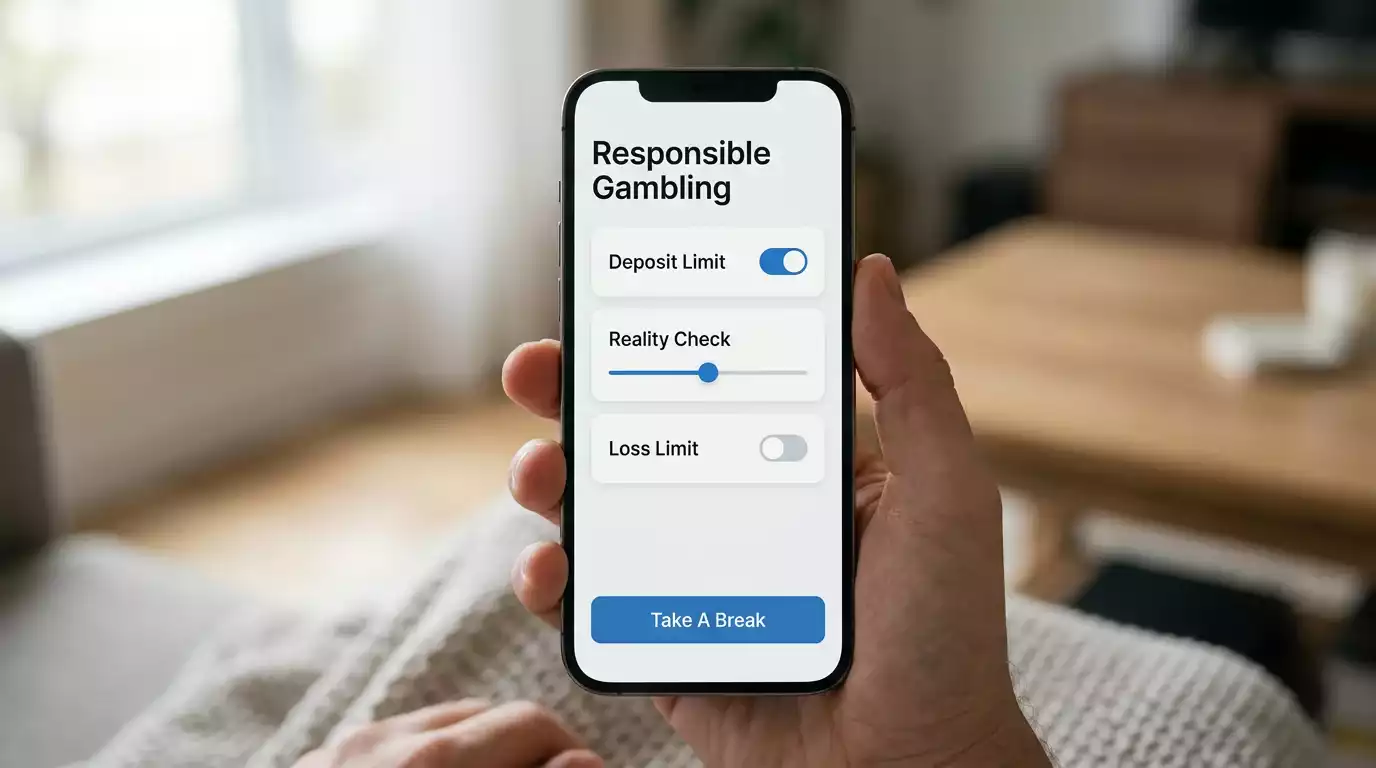
The tools that distinguish a decent UK operator from a great one are the ones that go beyond the minimum. Pre-deposit limit prompts — where the site asks you to set a deposit limit before your first deposit clears — show the operator is taking responsible-gambling design seriously. Cool-off periods of 24 hours or longer for major limit changes show the operator is not letting you remove your own brakes in a high-emotion moment. Reality checks that pause your session at intervals you’ve defined, requiring active confirmation to continue, are the small UX detail that separates thoughtful design from box-ticking.
Context for why this matters. The Gambling Survey for Great Britain found that 2.7% of UK adults score 8 or higher on the Problem Gambling Severity Index, with another 3.1% in moderate-risk territory (PGSI 3 to 7) and 8.8% in low-risk (PGSI 1 to 2). UFC betting is a small slice of the overall picture, but the fast-result, fast-emotional-engagement structure of fight-night betting makes it a category where the tooling matters more than average. Operators that take the tooling seriously are not patronising you; they are saving you from yourself on the nights when you’d otherwise hurt yourself.
The structural test for responsible-gambling tooling: go to the account settings of any operator you’re considering and look for the responsible-gambling section. Count the tools available. Try setting a small deposit limit and see how the interface handles it. Try requesting a 24-hour cool-off and see whether the site lets you reverse it instantly (bad) or holds you to it (good). Operators that make the tools easy to find, easy to set, and hard to remove are the ones to trust with your account.
GamStop integration is non-negotiable. Every UKGC-licensed operator is required to honour the GamStop register, which means if you’ve signed up for self-exclusion through GamStop, the operator cannot accept your registration or your deposit until your exclusion period ends. Verify that your prospective operator’s responsible-gambling page mentions GamStop by name. If it doesn’t, that is a signal.
Payment Methods And The KYC Walk
The UK regulatory framework limits which payment methods a licensed operator can accept. Credit cards have been prohibited for gambling deposits since April 2020 across the entire UKGC licensed sector, so any operator still showing a Visa or Mastercard credit option for funding is either non-compliant or offshore. Debit cards are standard, with Visa Debit and Mastercard Debit accepted at every major UK book. Bank transfers via Faster Payments are the cheapest path for larger stakes. Open Banking has been adopted by most operators in the last two years and offers near-instant deposits via your bank’s authentication.
E-wallets vary by operator. PayPal is accepted at most of the top UK books, with Skrill, Neteller, and Apple Pay/Google Pay common but not universal. Prepaid Paysafecards are available at most operators with a low daily cap. Cryptocurrency is not permitted at UKGC-licensed operators in the consumer-facing flow, so if a site offers crypto deposits, it is offshore.
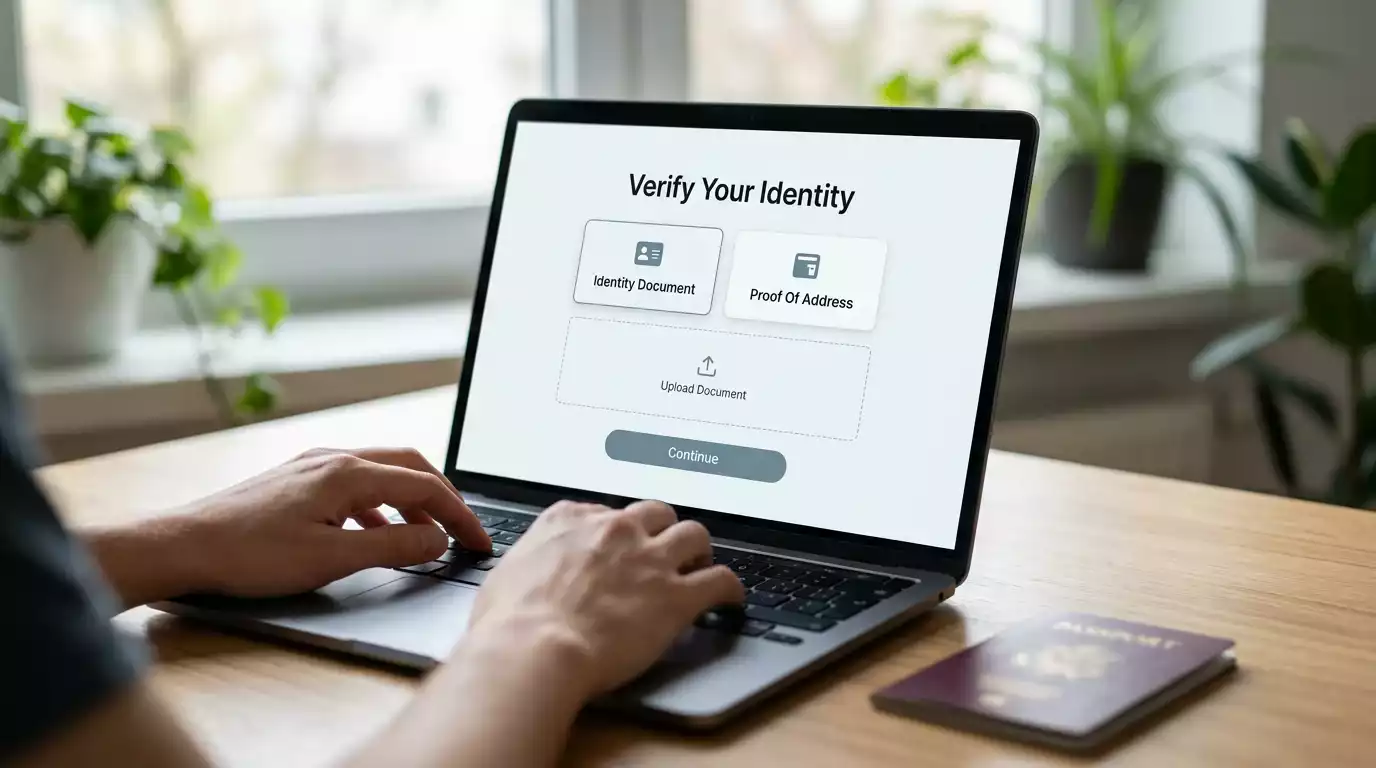
The Know-Your-Customer (KYC) walk is the first verification you’ll experience as a new UK bettor, and it varies wildly between operators. The lighter-touch books will verify you electronically against the credit agencies in seconds, no document upload needed for small initial deposits. The stricter books will ask for proof of identity (passport or driver’s licence) and proof of address (utility bill or bank statement) before accepting your first deposit. The strictest will additionally require source-of-funds documentation if your deposits exceed certain thresholds — typically £2,000 to £5,000 in a 30-day window, though this is operator-specific.
None of this is unreasonable. It is the operator complying with anti-money-laundering rules. But the speed and friction of the KYC walk does materially affect your day-one experience, and operators that handle it well will get you betting within minutes while operators that handle it badly can leave you locked out for days waiting for document review. Read recent customer feedback on KYC speed before you commit to a particular site.
Withdrawal speed is the other payment dimension worth checking. The published withdrawal times on most UK operators range from “instant” (for e-wallets, usually within 24 hours) to 3–5 working days (for bank transfers). The actual experience is more variable. Some operators clear withdrawals same-day on debit cards; some take the full 5 days even for trivial amounts. The fastest withdrawal experience I’ve had in the UK is via Open Banking, where the funds typically arrive in your bank account within an hour or two of the operator approving the withdrawal.
Mobile Experience On Fight Night
Most UFC betting in the UK now happens on mobile. The fight-night use case — sitting on a sofa with a phone in hand, scanning live markets between rounds — is where the mobile experience earns its keep. Two design choices distinguish the operators here: native app versus progressive web app, and live-market update latency.

Native apps, which you download from the iOS App Store or Google Play, generally deliver faster live-market updates and smoother in-play interaction because they can keep persistent connections open and render selectively without reloading the whole page. Progressive web apps, which run in the mobile browser, are easier to access and don’t require an install but typically have slightly higher latency on live odds. For pre-fight betting, the difference is negligible. For live in-play, it is the difference between catching a market on a knockdown and missing it.
The biggest UK books all offer native apps on both major platforms. Some smaller books only offer the PWA. None of this is a quality judgement — apps cost real money to maintain — but if you bet live UFC seriously, the native app is the better tool.
The mobile design choices that matter on a fight night: how the live market list is sorted (chronological by most recent update is best), how quickly the cashout button refreshes, whether the round-by-round market clearly indicates which round is currently live, and how the operator handles latency notifications when their odds are about to change. The good operators flash a “market suspended” message and freeze the price; the bad ones let you click on a now-stale price and then refuse the bet on the next screen because it “no longer matches the current odds”. The first behaviour is acceptable; the second is genuinely irritating.
Side-By-Side: How The Biggest UK Books Stack Up
Below is a feature comparison of the largest UK operators offering UFC markets, evaluated on the criteria from this article. I am not ranking them. I am laying out where they sit on each dimension so you can match the operator to your priorities. Every operator listed holds a current UKGC operating licence at the time of writing.
| Operator | UFC market depth (main) | MMA bet builder | Live in-play | Cashout | Mobile native app | Responsible-gambling depth |
|---|---|---|---|---|---|---|
| bet365 | Deep (70+ markets) | Yes, full granularity | Yes, low latency | Yes, partial supported | iOS and Android | Full UKGC standard |
| Betway | Deep (60+ markets) | Yes | Yes | Yes | iOS and Android | Full UKGC standard |
| Paddy Power | Mid-deep (50+ markets) | Yes | Yes | Yes | iOS and Android | Full UKGC standard |
| William Hill | Mid-deep (50+ markets) | Yes | Yes | Yes | iOS and Android | Full UKGC standard |
| Coral | Mid (35+ markets) | Limited | Yes | Yes | iOS and Android | Full UKGC standard |
| Ladbrokes | Mid (35+ markets) | Limited | Yes | Yes | iOS and Android | Full UKGC standard |
Read the table for what you need. If you want maximum builder flexibility on Numbered Events, the depth column points one way. If you live on the prelims and want the broadest market across the full card, depth matters most. If you bet primarily through the live market on fight night, in-play and cashout quality matter more than total market count. Everyone offers the regulatory minimum on responsible-gambling tooling because that’s the licence requirement; what varies above the minimum is the UX of the tools.
The notable gap in this table — and the one no public table can fill — is pricing quality. The overround on the same bout will differ between any two of these operators on any given week, and the operator that prices best for you depends on which markets you bet most often. The only way to know is to track it yourself. Before depositing any funds, always perform a quick UKGC licence check for UFC betting sites to ensure your money is protected.
Red Flags That Should End A Sign-Up Right There
I keep a short mental list of structural red flags. If a site I’m evaluating shows any of them, I close the tab.

First red flag: no UKGC licence number visible in the footer. The licensed operators display it prominently. The unlicensed ones either hide it, fake it, or claim to be licensed in another jurisdiction (Curaçao, Malta, Gibraltar) that does not protect UK consumers. If you have to hunt for the licence, the answer is no.
Second red flag: the site accepts credit cards for deposits. UKGC has banned this since April 2020. Any UK-targeted operator still offering credit-card deposits is non-compliant and almost certainly offshore.
Third red flag: no GamStop mention anywhere on the responsible-gambling page. Every legitimate UKGC site participates in GamStop. Sites that do not are operating outside the regulatory perimeter.
Fourth red flag: aggressive push notifications or marketing pop-ups during the sign-up flow that you cannot easily dismiss. Compliant UK operators are constrained by UKGC marketing rules; the heavy-handed pushy interfaces are usually offshore sites pretending to be UK-targeted.
Fifth red flag: missing or hard-to-find deposit limits during the account creation flow. The UKGC requires operators to offer deposit limits at sign-up. If you have to dig three screens deep to set one, the operator’s design is hostile to responsible gambling and the rest of the experience will reflect that.
Sixth red flag: withdrawal terms that look punishing. Look for minimum withdrawal amounts that exceed £20, wagering requirements attached to deposits (not just bonuses), or restrictions like “withdrawals only available after 30 days of account activity”. These are designed to trap your money. Walk away.
Seventh red flag: customer service that doesn’t respond. Try emailing the operator a basic question before you deposit. If the response takes more than 48 hours or never comes, that is how they’ll treat you on a real complaint.
The choice of a UFC betting site is not a one-time decision. It is something you should revisit every six to twelve months as operators add features, drop features, change pricing structure, and shift their position in the market. The criteria stay the same; the answers change. Run the framework. Decide for yourself. And remember that the entire premise of this article is that no one site is “best” — only better fit, for a specific bettor, on a specific set of priorities, in a specific week. Find the most secure and reliable operators through our comprehensive guide to betting on UFC fights.
Where can I confirm a UFC bookmaker holds a valid UK Gambling Commission licence?
The UKGC maintains a public register of all licensed operators at the Gambling Commission’s official website. Search the operator’s name and you’ll get back the licence account number, company details, current status, and the type of licence held. The same account number should appear in the footer of the operator’s own site — match the two. If they don’t match, or if the operator’s site doesn’t display any account number, that is a hard stop on signing up.
What happens to my UFC bets if a UK operator loses its UKGC licence mid-event?
UKGC licensing requires operators to maintain segregated customer funds, so a licence revocation does not vaporise your balance — the regulator typically arranges for orderly settlement or transfer. Open bets are usually voided and stakes returned, though the precise mechanics depend on the timing and reason for the licence action. The protections only apply within the UKGC perimeter; outside it, customer funds are unprotected.
Why do some UK operators refund UFC bets after a fight is over?
Refunds after a completed fight typically follow integrity-related findings. If a regulatory body or the operator’s own risk team flags suspicious betting patterns on a specific bout, the operator may choose to void all settled action and return stakes. The November 2025 case involving Isaac Dulgarian on UFC Vegas 110 is the clearest recent example — Caesars and DraftKings refunded all bets after IC360 flagged unusual market activity. UK operators apply similar policies for cases that breach their integrity criteria.
Prepared by the bet on ufc Fight editorial staff.