UFC Heavyweight Betting Trends UK: Knockout Rates
 Available in US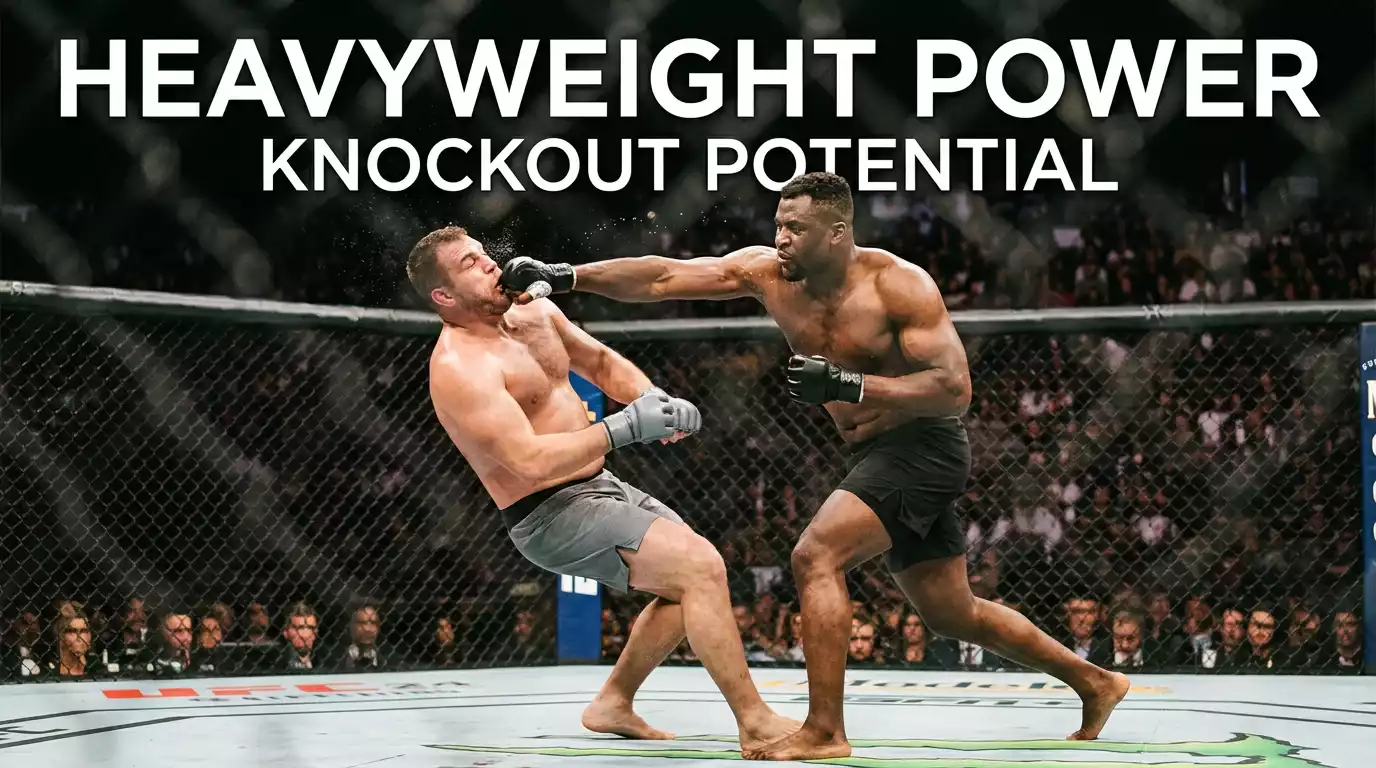
Heavyweight Knockout Statistics and Betting Markets UK
I once saw a UFC heavyweight main event end in 19 seconds. The favourite had been hyped for weeks as a technical evolution of the division, the underdog was supposed to be the predictable banger, and the entire fight resolved with a single left hook in the first exchange. That’s heavyweight. The cardio narratives, the technical evolution stories, the careful tape study — all of it gets ambushed by the one obvious truth: a 240-pound man landing clean ends fights instantly, and ufc heavyweight betting markets price that reality whether you respect it or not.
Heavyweight is the division where method-of-victory and round totals are almost always shorter, the moneyline gaps are wider than they look at first glance, and the underdog routinely lands the punch that ends the discussion. The market knows this. Bookmakers price heavyweight differently from any other division because the underlying distribution of outcomes is genuinely different. A UK punter who treats the heavyweight card the same way as a lightweight or featherweight card will leak money in places they don’t expect.
This piece walks through what’s different about heavyweight from a betting perspective: the knockout rate that anchors everything, the scarcity of decisions, the underdog problem the market never fully solves, the cardio flag that the late-round KO actually reveals, and how all of this maps onto the markets you’ll actually bet. The framework matters more than any individual fighter’s recent form, because the divisional structure rewards specific bet types and punishes others.
The knockout rate that anchors every heavyweight line
Heavyweight finishes by KO/TKO around 50% of the time. That isn’t a marketing line — it’s the divisional rate across the modern UFC era. Compare to the men’s UFC overall, where KO/TKO accounts for around 33.3% of fights and overall finishes (KO + submission) hit around 53%. Heavyweight matches the overall finish rate just on knockouts alone, without needing submissions to push the total higher.
What that means at the betting window: the KO/TKO market is the default, not an exotic side bet. On any heavyweight fight, the question isn’t whether one fighter can score a finish — both can — but whether the line price for “KO/TKO inside the distance” reflects the actual 50% baseline or whether the operator has priced it tighter to account for a specific stylistic matchup. When the line on “Fight ends inside the distance via KO/TKO” sits at evens or shorter, the market is treating the matchup as routine for the division. When it pushes out to 8/13 or 4/7, the operator is telling you they think one or both fighters has the technical chops to extend the fight.
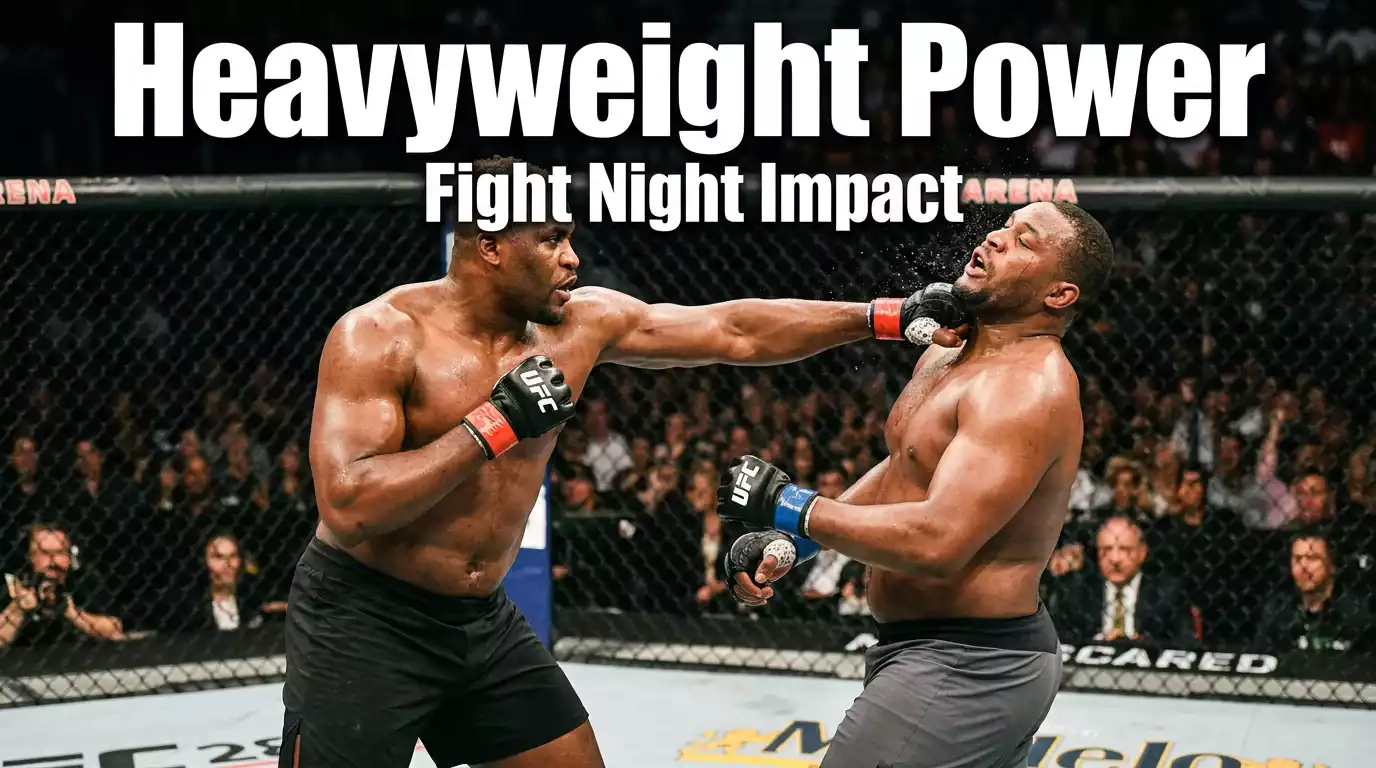
The corollary matters too. Each individual fighter’s KO/TKO win line — “Fighter A by KO/TKO” — has to be evaluated against the underlying 25% baseline (since the 50% finish rate splits roughly evenly between the two fighters when neither has a clear technical edge). If you’re being offered Fighter A by KO/TKO at evens (50%), you’re being told the operator thinks his KO probability is double the divisional baseline. That’s a strong claim. Decide whether it’s true before backing it.
Where the 50% rate comes from is one-punch power. Heavyweights aren’t quicker or more skilled than smaller fighters — they’re heavier, and they hit harder. The physics doesn’t change as the fight unfolds. The fighter who walks through a clean shot in round three is the same fighter who would have walked through it in round one; the only difference is the cumulative damage and fatigue that make him slightly more likely to get caught.
Why the decision market is so thin
Heavyweight goes the distance roughly 28.6% of the time — the lowest decision rate of any UFC division. That’s not because heavyweights are less technical (some are very technical), but because the price of a clean shot is so high that fights rarely have time to develop into the championship rounds. The combination of low engagement volume and high consequence per exchange compresses the fight calendar inside any single bout.
From a betting perspective the implication is that “Fight goes the distance” lines at heavyweight are systematically longer than at smaller weight classes. Where a flyweight or bantamweight “Goes the distance” might trade at 4/5 or thereabouts, the equivalent heavyweight line often sits at 6/4 or 7/4. The market is pricing real divisional skew, not opinion about specific fighters.
The decision-side bet has a known shape too: when heavyweights do go the distance, it’s often because both fighters are technical strikers without one-shot power matched against each other, or because both have strong takedown defence and the fight stalls into pace-without-finish. Spotting that matchup signature in advance — strong striking technique but limited power, or two grapplers who neutralise each other on the mat — is the basis for finding value on heavyweight decision lines. Most heavyweight fights aren’t this matchup, which is why most heavyweight fights don’t reach the cards.
One operational note: late-round decisions in heavyweight often come down to round-by-round scoring rather than dominant gameplans. A fighter who steals a close third round on output without serious damage is hard to predict — and the live betting on decision markets reflects that uncertainty, with cashout values for “by decision” tickets typically holding firmer than for other method outcomes.
The underdog problem in a one-punch division
Heavyweight is the one UFC division where backing significant underdogs has a defensible long-run argument, and it’s because of the same physics that drives the 50% KO rate. UFC favourites win 65 to 70% of bouts overall, and heavy favourites — those priced at 1/4 or shorter — win around 80% of the time. Heavyweight underdogs aren’t immune to that base rate, but the variance around it is larger.
The reason is that a heavyweight underdog needs to land exactly one clean punch to flip the entire fight, and most heavyweight underdogs are perfectly capable of that. A lightweight underdog has to win rounds against a more technical opponent over 15 to 25 minutes. A heavyweight underdog has to land one shot in 75 to 125 minutes of total ring time across a championship fight, and three rounds of striking gives a meaningful number of opportunities even against a heavy favourite.
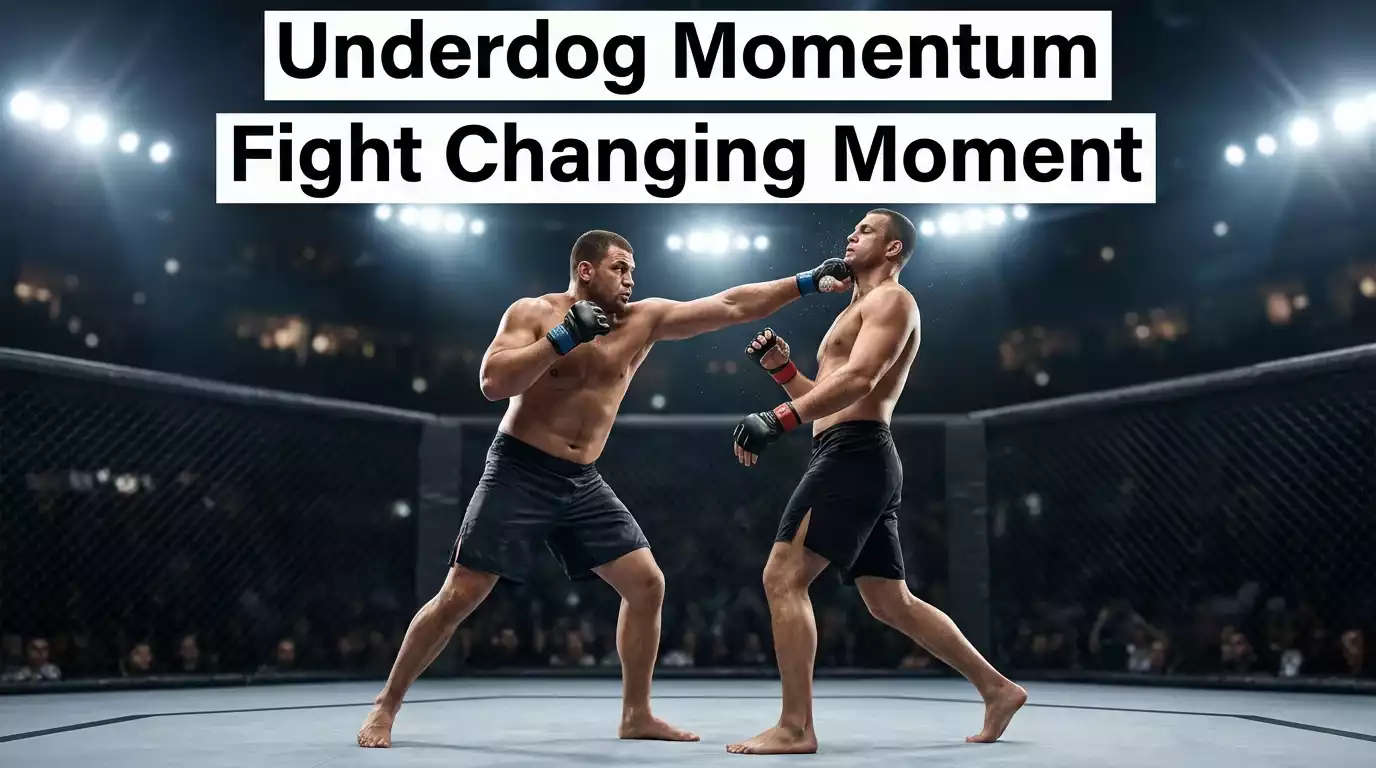
That doesn’t mean “always bet the heavyweight dog” — it doesn’t, the favourites still win two out of three. What it means is that heavyweight underdog moneyline prices are often shorter than they should be relative to the underlying probability, because the market is over-correcting for the favourite’s perceived technical edge. The disciplined play is matchup-specific: heavyweight underdogs with documented one-shot power against favourites whose chin has been tested are the highest-value moneyline positions in the sport, full stop.
The corollary is that heavyweight underdog by KO/TKO is one of the few prop markets where the implied probability often sits noticeably below the true probability. If the moneyline on a 3/1 underdog implies 25% win probability, and that underdog’s wins are 80% by KO/TKO historically, the KO/TKO market should price at around 5/1 or thereabouts. Operators sometimes price it longer — particularly on prelim fights where MMA-specific risk is lower priority — and that’s where small edges hide.
The late-round KO and what it reveals
A late-round heavyweight KO is one of the most misread events in the sport. The casual reading is “exciting back-and-forth fight, anyone could have won”. The analyst’s reading is “the loser ran out of gas, and the winner was the man who paced himself better”. Both readings are partly right. The betting-relevant reading is that the late-round KO is a cardio flag — a signal about which fighter actually has the conditioning to run heavyweight cardio across all three or five rounds.
The numbers support this. Around 41% of men’s UFC bouts end before the 2.5-round mark — meaning most heavyweight finishes come early, when both fighters are fresh. The late-round heavyweight KO is the minority case, and when it happens it’s almost always because the loser visibly slowed before the finishing shot landed. Watch the second half of round two on any heavyweight bout: the fighter dropping his hands, breathing through his mouth, and stepping straight back rather than circling is the fighter whose round-three KO is being telegraphed in real time.
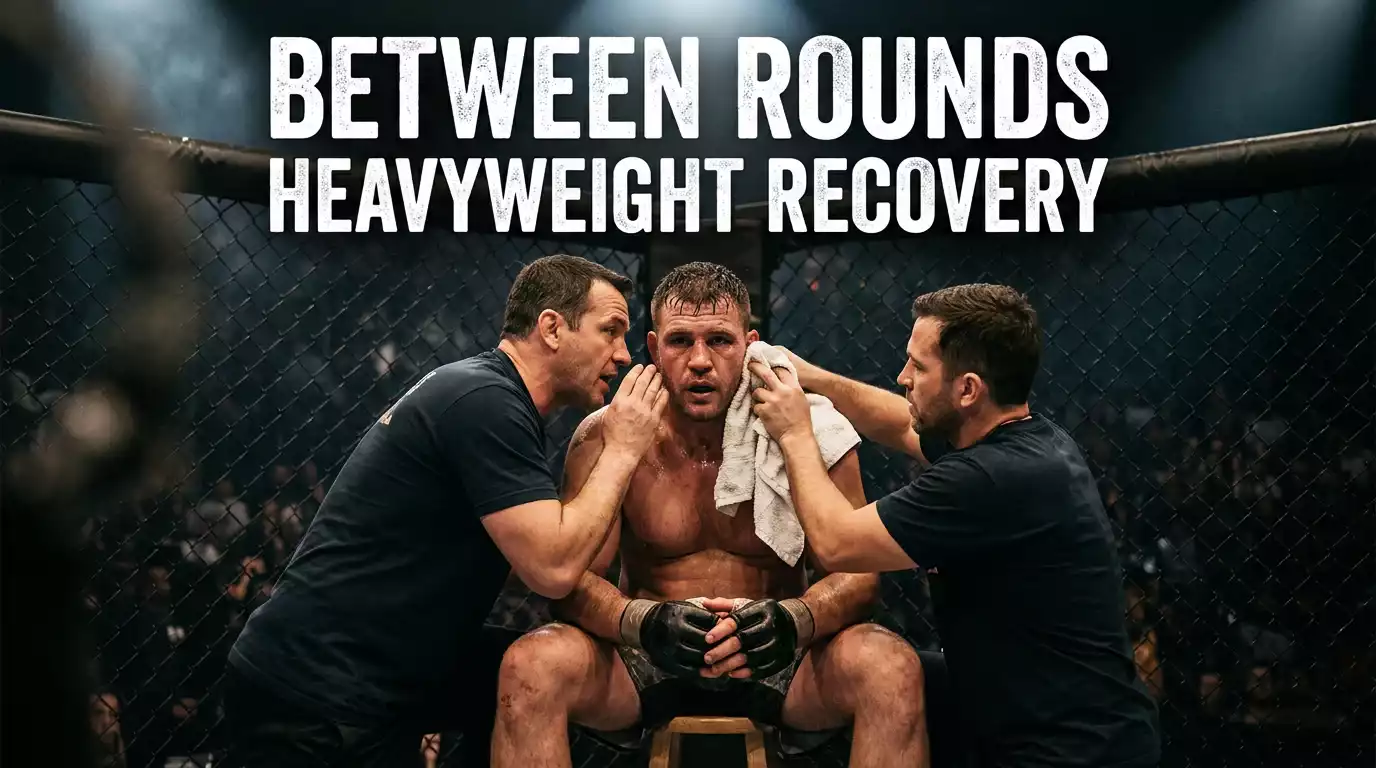
For pre-fight betting this matters because cardio is one of the most reliable predictors a punter can use. Fighters with documented gas tank issues across multiple recent fights are systematic value as round-totals underdogs (Under 2.5 against them, Over 2.5 with them as the gassing fighter being finished) and as cashout targets in live betting. The market generally prices recent form, but it prices wins and losses better than it prices stamina patterns.
For in-play betting, the cardio flag is even more powerful. If a heavyweight visibly slows in the second half of round two and the fight enters round three, the live moneyline on his opponent tightens but rarely tightens fast enough to reflect the true probability of a round-three finish. That’s where in-play value exists — between the broadcast showing the cardio breakdown and the operator’s pricing engine catching up to it.
Mapping heavyweight reads to the markets that pay
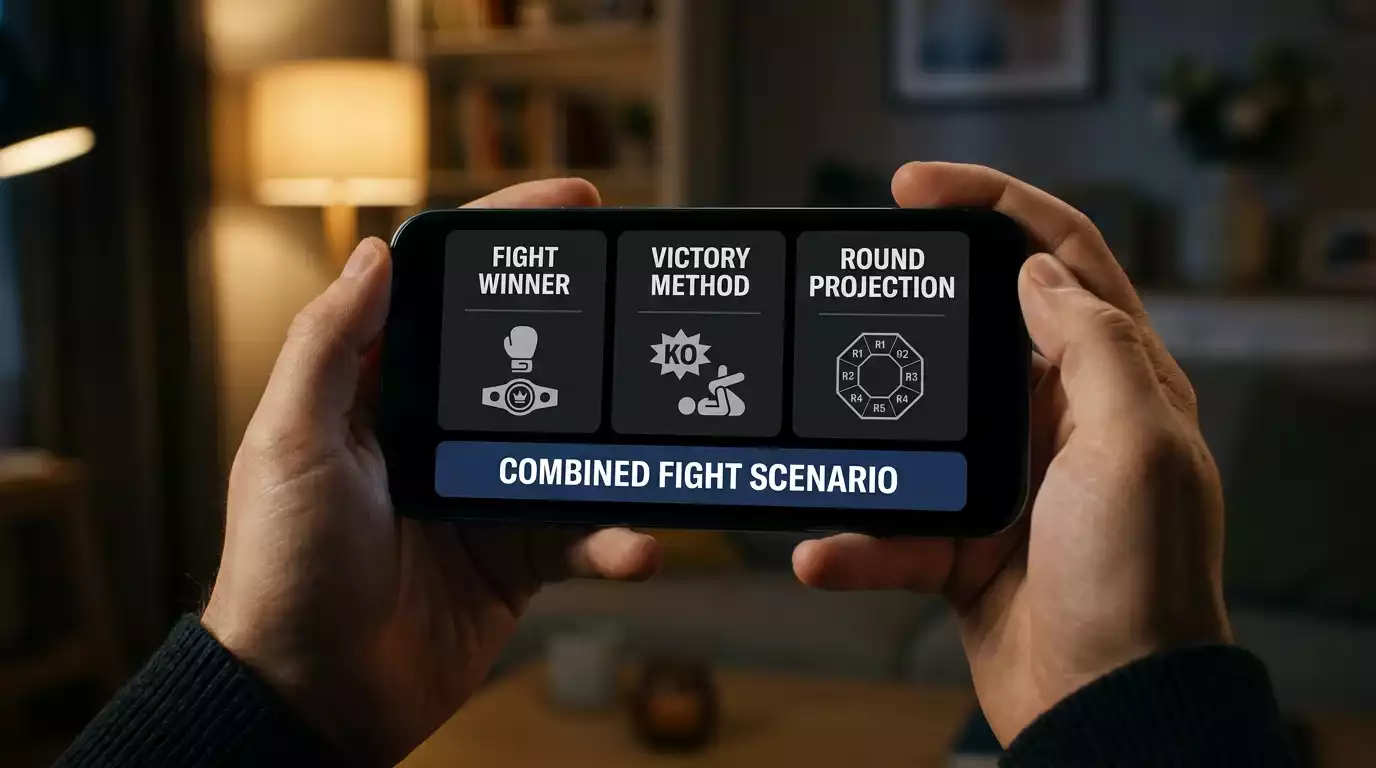
Heavyweight reads should mostly land in two market types: method-of-victory (specifically KO/TKO splits) and round totals (specifically Under 2.5 rounds). Those are the markets where the divisional KO rate and decision scarcity create predictable price patterns. Moneyline still matters, but most heavyweight moneyline value gets discovered in combination with method, not on its own — see how method-of-victory betting interacts with moneyline reads for the underlying mechanics that apply across weight classes.
The specific mappings worth thinking about: heavy underdog with documented power → underdog by KO/TKO at fractional odds that imply less than 80% of the moneyline-derived win probability. Two heavy hitters meeting → Under 2.5 rounds or “fight ends inside the distance” at a price tighter than the divisional 71.4% baseline (since 28.6% go the distance, the underlying probability of “inside the distance” is 71.4%, and lines pricing the Under at 4/9 or shorter are reasonable rather than aggressive). One technical striker against a grappler who can’t strike → method market split between the striker’s KO and the grappler’s decision, with neither side being a finishing favourite.
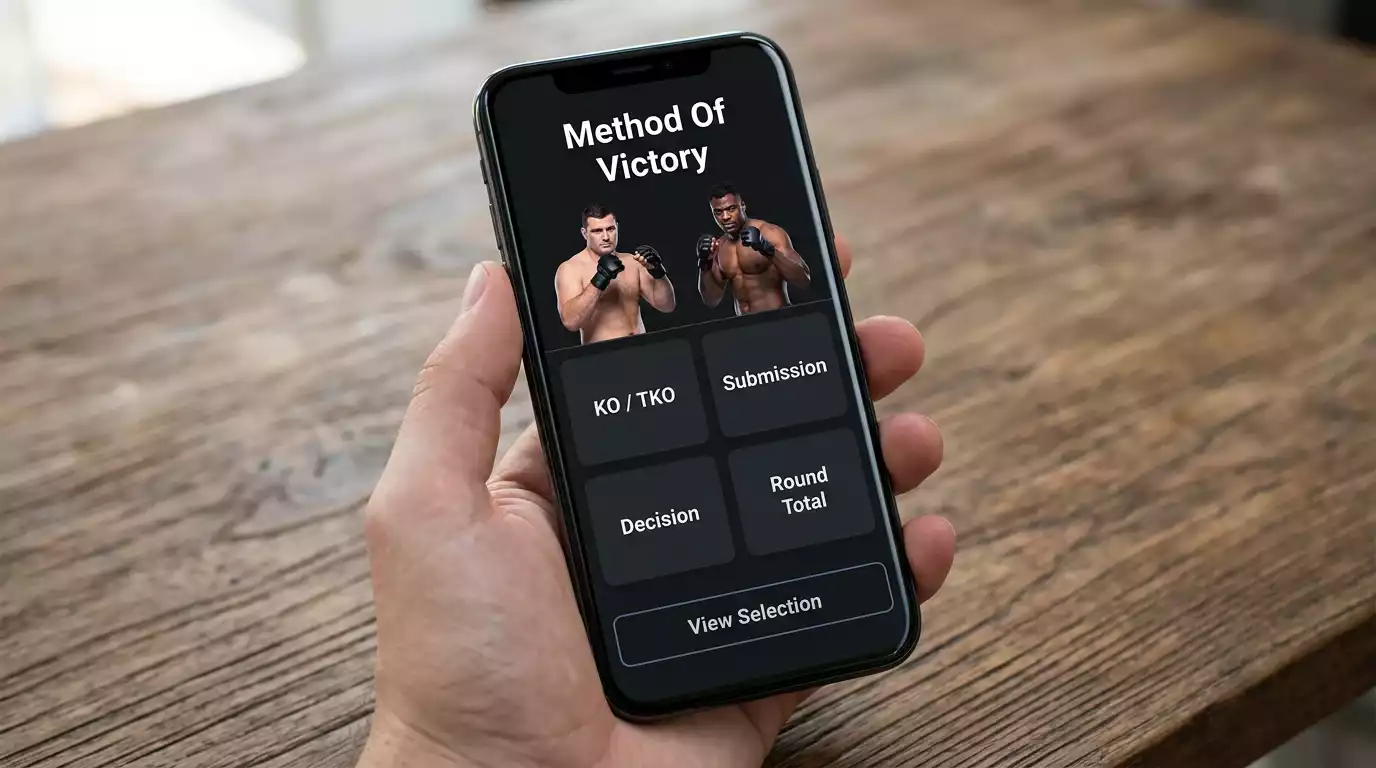
What to avoid: heavyweight parlay accumulators stacked across a card. The variance per fight is too high, and the joint probability calculations don’t survive contact with the actual outcome distribution. Individual heavyweight fights are bettable; combining them is gambling at unfavourable mathematics.
And one final framing point: the heavyweight card on any given UFC main event is the most exciting product in the sport precisely because the bets on it are hardest to call. The bookmakers know this. They price wider margins on heavyweight markets than on flyweight or featherweight markets, because their own confidence in the model is lower. That wider margin is a tax on the punter — it means the operator’s edge is bigger and your edge has to be correspondingly larger to overcome it. Heavyweight is bettable, but it isn’t easy. The disciplined approach is to pass more often than you bet, and to make the bets you do place reflect specific, defensible reads on power, cardio, and chin.
Are UFC heavyweight five-round main events priced differently from three-round prelims?
Yes, in important ways. Five-round main events extend the fight calendar by 67%, which mathematically raises the probability of both fighters reaching gas-tank issues and proportionally raises the probability of late-round KOs and decisions. Operators price this — ‘goes the distance’ lines on five-round heavyweight fights tend to be slightly shorter than on three-round bouts of similar technical matchup, reflecting the extra ring time. The KO/TKO split also shifts, with a larger proportion of finishes coming in rounds four and five than would be expected from a three-round bout extrapolated.
Why are UFC heavyweight underdog moneylines often shorter than expected?
Because the market knows what the data shows — heavyweight underdogs have a real shot to land one finishing punch even against more technical favourites, and the implied probability has to reflect that. A 3/1 heavyweight underdog has approximately the same theoretical win probability as a 4/1 or 5/1 lightweight underdog, because the path to victory at heavyweight is shorter and more dependent on a single landed shot. Operators price the shorter underdog line specifically to account for this.
Written by the editors at bet on ufc Fight.